Semiconductor Stocks Just Lost $1 Trillion in a Week. Bubble, or Reset?
TL;DR
- The chip complex shed over $1 trillion in market value in one week.
- Intel: down ~21%. Micron: a 22% round trip off its highs. NVDA, AMD, Marvell, Western Digital, Applied Materials: all red.
- BofA's Bubble Risk Indicator hit 0.91 for semis, well above the Nasdaq 100's 0.69, and the June 2000 comparisons are flying.
- Meanwhile the 2026 semiconductor market forecast just got upgraded from $1.0 trillion to $1.3 trillion. Demand is fine. The multiple got shot.
A Trillion Dollars, Gone In Five Sessions
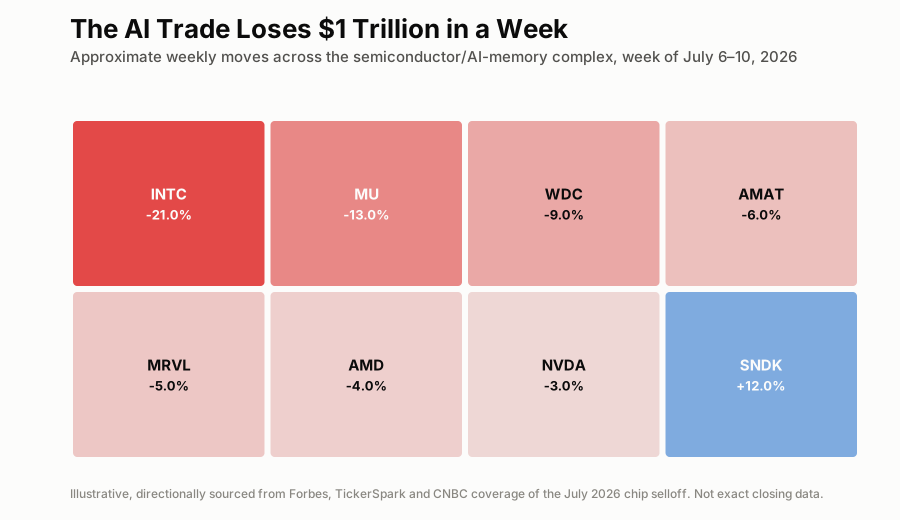
The week across the chip complex. One green square. Guess which company sells the thing that's physically running out.
You don't lose a trillion dollars of market cap because the news got bad. The news this week was objectively good: Micron beat and raised, SK Hynix got 7x oversubscribed on a $26.5 billion IPO, and the industry's 2026 revenue forecast went up 30% in four months. You lose a trillion dollars when everything was priced for perfect and the market decides to start charging for risk again.
That's what this was. A repricing of certainty, not a repricing of demand.
The Bull Case Didn't Die
- AI data centers are structurally starved of memory and compute. NAND supply grows 17% this year against demand growing multiples of that.
- SK Hynix just raised the largest foreign IPO in US history at 7x oversubscription. Institutions do not write $26.5 billion checks into bubbles they believe are popping.
- HBM and NAND pricing keeps climbing quarter over quarter. These are earnings arriving now, on this quarter's income statement, not promises about 2029.
The Bear Case Is Also Real
- Concentration. A handful of names drive most of the index's return. That exact setup is why drawdowns in this sector are violent instead of orderly.
- Rates. AI capex is the longest-duration bet in the market, and a hawkish Fed discounts it hardest.
- Custom silicon. Every hyperscaler building in-house AI chips is chipping away at the "just own NVDA forever" trade. Slowly, then maybe not slowly.
- The 2000 rhyme. BofA's 0.91 reading and overbought conditions last seen in June 2000 deserve respect, not eye-rolls. The people ignoring that signal in 2000 also had great fundamentals to point at.
The Filter That Actually Works
Split the sector into two buckets and everything gets simpler. Bucket one: companies whose pricing power lands on the income statement today. Memory, HBM, NAND. SanDisk grew revenue 251% and finished the massacre week green. Bucket two: companies priced on capex promises that pay off someday. When fear hits, bucket one gets bought within days because the earnings are right there. Bucket two keeps bleeding, because "someday" is exactly what a nervous market refuses to pay for.
Buy the paid-today names on the flush. Let someone braver own the someday names.
The Options Angle
The gift nobody's taking: the VIX is sitting near 15 while the biggest sector in the market just had a trillion-dollar tantrum. Index-level protection is stupidly cheap relative to what's actually happening under the hood.
- Buy SOXX puts four to six months out, roughly 10% out of the money. That's your tail insurance if the 2000 crowd turns out to be right, priced while vol is asleep.
- Fund them with covered calls on your most stretched winners. You keep the longs, the calls pay for the puts, and a sideways summer costs you nothing.
- Do not panic-sell the longs to "wait for clarity." Clarity arrives 20% higher. Hedged length beats flat every time the underlying trend is this strong.
Bubble Or Not?
Wrong question, and the people asking it loudest are selling newsletters. The real question is which names make you pay for promises and which ones bill you for product that's flying off the shelf. This week the market marked down both indiscriminately. That indiscriminate part is the opportunity. The memory names with sold-out order books get bought back first, and I want to own them before that finishes happening.
Comments
0 totalNo comments yet. Be the first to drop a take.