57,000 Jobs. The Report Everyone Ignored Is the Scariest Number on the Board
TL;DR
- June nonfarm payrolls: +57,000 against a 115,000 consensus. April and May got revised down by a combined 74,000.
- The unemployment rate FELL to 4.2%, and that's the ugly part: it fell because participation collapsed to 61.5%, the lowest since March 2021. People aren't finding jobs, they're leaving the count.
- Leisure and hospitality lost 61,000 jobs in a single month. That's a consumer-economy warning shot, not noise.
- Meanwhile nine FOMC members want a rate HIKE into this. The word for weak growth plus rising rates plus war-fed inflation is one nobody at the Fed will say out loud, so we'll say it: stagflation risk. The next print, August 7, is the tiebreaker.
The Chart The Market Skipped Past
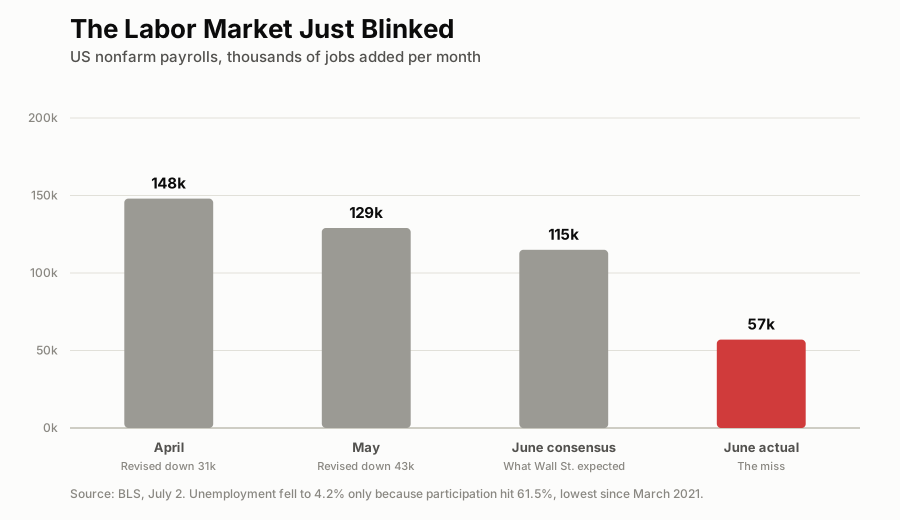
Three months of deceleration ending in a miss by half. The trend is the story, not the single print.
The June jobs report landed July 2, right as the market was busy with Micron's selloff, an IPO, and a war. It got a day of coverage and moved on. It deserved a month, because the pattern inside it is the most bearish macro data of the year.
Why This Report Is Worse Than The Headline
The trend is a staircase down. April 148k, May 129k, June 57k, and both prior months revised lower. That's not a wobble, that's deceleration with momentum. Revisions this consistently negative historically mean the real-time numbers are overstating strength, which puts the true June figure closer to stall speed.
The unemployment rate is lying to you politely. A falling jobless rate looks great in a headline. This one fell because 0.3 points of the labor force walked away, taking participation to depths last seen during the pandemic recovery. An economy where the unemployment rate improves through discouragement is weakening, whatever the headline claims.
The composition is a consumer warning. Healthcare, social assistance and professional services carried the whole print. Leisure and hospitality, the purest read on discretionary consumer spending, shed 61,000 jobs. When restaurants and hotels stop hiring in June, peak season, the consumer is already pulling back. Tuesday's bank earnings, with their credit-quality disclosures, tell you whether the lenders see the same thing.
The Collision Nobody Wants To Name
Set the two data streams side by side. Labor: 57k jobs, sinking participation, three months of deceleration. Inflation: war-fed oil, a hawkish dot plot, 58% September hike odds. A Fed hiking into a weakening labor market because a war keeps feeding inflation is the textbook stagflation setup, and the market is pricing exactly none of it: the S&P sits 0.6% off record highs.
One of those two positions is wrong. Either the labor data is a blip and the market's right to ignore it, or the market is about to discover why "hike into weakness" is the most feared phrase in macro.
What August 7 Decides
The July jobs report lands Friday, August 7, ten days after the FOMC meets. The scenarios:
- A bounce back above 100k buries the stagflation argument, validates the hike path, and the market's serenity was right all along.
- A second sub-60k print makes the deceleration undeniable, and the Fed's hike case collides head-on with its employment mandate. That's the scenario that cracks the record-high grind, because it removes the "economy is fine" floor under every dip-buy of the past two years.
- A negative print ends the hike conversation the same morning and starts the cut conversation the market's been begging for, at the worst possible price: cuts because things broke.
The Options Angle
- The direct expression is small caps. The Russell 2000 lives and dies on domestic labor and credit conditions. IWM puts two to three months out (covering the August 7 print) are the cleanest stagflation hedge on the board, and priced like nobody's read the jobs report, because nobody has.
- Pair it against the banks. Long XLF into Tuesday's earnings, short IWM through August 7. If the economy holds, both legs are fine. If labor cracks, the small-cap leg pays multiples of what the bank leg costs.
- Keep the hedge dated past August 7, not July. The FOMC meets July 28-29 with only this weak June report in hand; the July jobs data arrives after they've spoken. That sequencing (hawkish Fed, then fresh labor data) is exactly where an ugly surprise does maximum damage.
The Report To Actually Fear
Everyone's watching Tuesday's CPI, and fair enough, it's the loudest print of the week. But inflation reports tell you what already happened to prices. This jobs trend tells you what's about to happen to earnings, credit, and the consumer, and it's pointing down while the index prints records. August 7 is circled on our calendar in red. It should be on yours.
Comments
0 totalNo comments yet. Be the first to drop a take.