Memory Stocks Are Dumping Again. The Math Says the Flush Is Almost Done
TL;DR
- Monday's Korean crash hit US memory names at the open: MU -3.8%, SNDK -4.2%, WDC -4.1% premarket.
- The complex-wide drawdown scoreboard: Kioxia -32% from its June high, MU -22%, SNDK -18%, SK Hynix -15% in one session.
- Meanwhile the fundamentals haven't budged: NAND contract prices still up 70-75% quarter over quarter, HBM still sold out into 2027.
- Price crashed, physics didn't. That gap closes one of two ways, and the earnings calendar decides which within two weeks.
The Drawdown Scoreboard
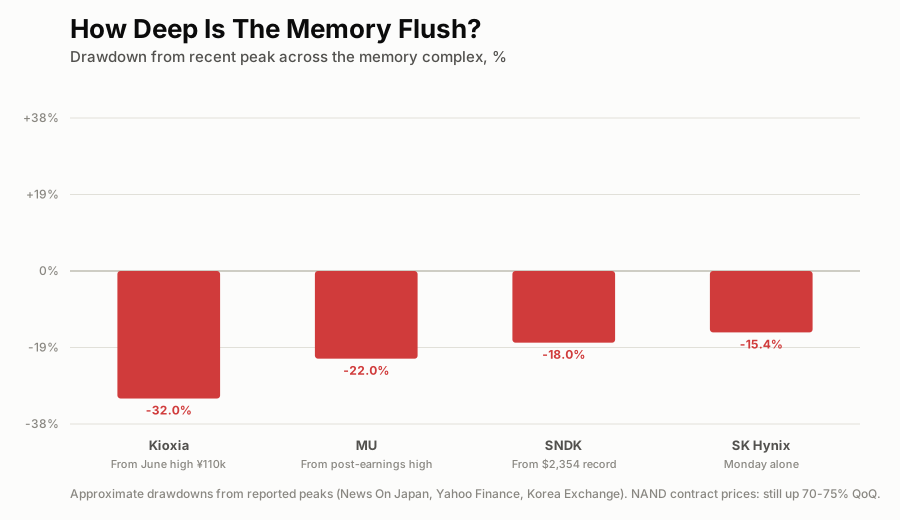
How much premium the memory complex has already given back. This is what late-stage flushes look like.
Two weeks ago this sector was the untouchable trade of 2026. Now every name in it is in or near bear-market territory from its highs, and this morning's Seoul contagion added another leg. The question every holder is asking: is this the healthy part or the beginning of the end?
The Case That It Continues
- The first fundamental crack appeared today. A Korean brokerage pegged SK Hynix Q2 operating profit at 60.4 trillion won versus 65 consensus. Until this morning, every memory selloff in 2026 was pure positioning. This is the first time an analyst attacked the earnings themselves.
- The trade got crowded and stayed crowded. A memory ETF became the hottest thematic fund since the pandemic, retail piled in (the 2026 playbook piece has the receipts), and crowded trades unwind in overlapping waves, not single sessions.
- The macro backdrop is hostile this specific week. War-inflated oil into Tuesday's CPI, hike odds at 58%, and high-multiple chip names are the first casualty of every hawkish repricing.
The Case That It's Nearly Done
- The physical shortage is untouched. NAND contract prices are up 70-75% quarter over quarter and supply is projected short until 2027-2028. Nobody canceled an order this weekend. A single brokerage's below-consensus estimate is a haircut to "spectacular," not a downgrade to "bad."
- The drawdowns have reached historical flush depth. A 32% correction in Kioxia and 22% in MU already matches the sector's typical mid-cycle shakeouts during intact uptrends. The premium is paid back; what's left is closer to fair value on current earnings than to bubble pricing.
- The sellers are identifiable and finite. Post-IPO profit-takers in Seoul, momentum funds stopping out, retail ETF redemptions. Every one of those seller types exhausts. The buyers waiting underneath (hyperscalers don't stop needing NAND because the KOSPI had a bad Monday) don't.
The Verdict
The flush is late-stage, not early. Positioning damage of this depth with fundamentals this intact resolves upward far more often than it breaks, and the resolution has a date: SK Hynix's earnings, where the 60.4-versus-65 whisper either confirms or dies. Before that print, this is a level-by-level stalking exercise, not a back-up-the-truck moment.
The levels: MU $900 is still the line that matters, and it's now within a bad session's reach. SNDK $1,700 held last week's test and gets retested this week. Hold those, and the complex bottoms with the Korean flush. Lose both on volume, and the market is telling you the earnings whisper is right.
The Options Angle
- Sell the fear, don't buy the falling knife. Put credit spreads under MU $850 and SNDK $1,650, 30 to 45 days out. This morning's imported panic fattened those premiums to the richest levels since the SKHY debut, and both short strikes sit below levels that have already survived one flush.
- The confirmation trade beats the anticipation trade. If SK Hynix's actual earnings beat the lowered whisper, buy two-month MU and SNDK calls that day. You'll pay a few percent more than bottom-tickers and skip the scenario where the whisper was right.
- Own one cheap hedge in case the thesis is wrong: WDC or SOXX puts eight-plus weeks out. If the memory cycle genuinely turned, the complex has another 20%+ of downside and the hedge pays for every put you sold. Cost of being wrong: small. Cost of being unhedged and wrong: the whole trade.
Sooo... Dead Cycle Or Discount?
Discount, on the evidence. Cycles die when supply catches demand or demand disappears, and neither happened this weekend; a crowded trade just got uncrowded at maximum speed. The market handed you the memory complex 15 to 32 percent cheaper than two weeks ago while quarterly NAND pricing runs at record growth. Take the premium being offered, respect the two levels, and let SK Hynix's print settle the argument.
Comments
0 totalNo comments yet. Be the first to drop a take.