Nasdaq 100 Rides Chip Stocks Higher While a War Restarts in the Background
TL;DR
- QQQ popped 1.55% in a single session this week, and chips did all of it: SOXX closed up over 2% the same day.
- The catalyst was SK Hynix's Nasdaq debut, 7x oversubscribed on a $26.5 billion raise, the biggest foreign IPO in US history.
- Same week: the Iran ceasefire collapsed, oil spiked 5%, the VIX jumped. QQQ finished the week green anyway.
- Up ~28% over twelve months and sitting at the top of its 52-week range. Strong trend, stretched price, defined-risk entries only.
Chips Carried The Whole Week
The Nasdaq 100 is a referendum on exactly one trade: AI infrastructure. This week the referendum came back yes, emphatically, with the biggest foreign IPO in US history serving as the ballot.
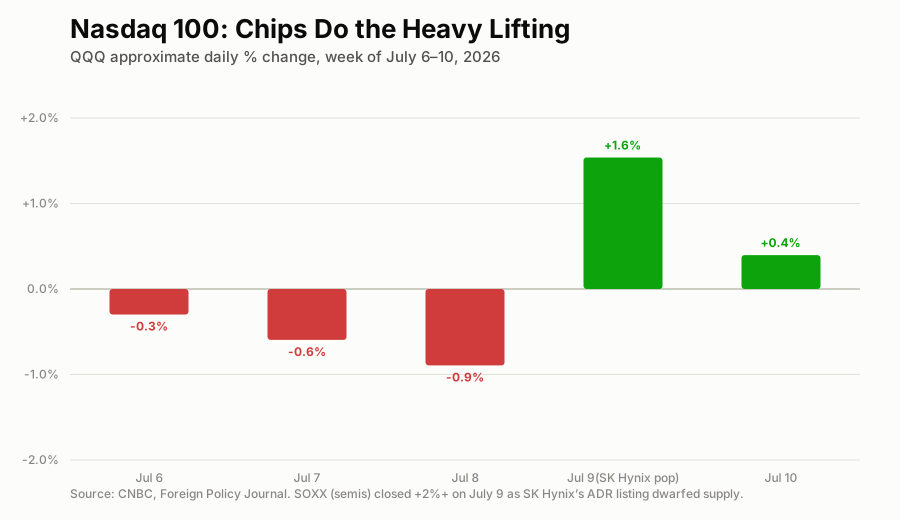
QQQ's daily moves: three red days of war headlines and chip jitters, erased by one SK Hynix pop.
Look at what this index absorbed and still closed green: a war restarting, crude up 5%, the VIX up nearly 15% in a session, and a trillion-dollar semiconductor drawdown bleeding through the first half of the week. Then SK Hynix's book came in 7x oversubscribed, the market took it as proof that institutional AI money is still a firehose, and one Thursday session flipped the whole week.
That's the tell about what this index runs on. Earnings and AI capex move it. Geopolitics interrupts it for about a day.
Six Stocks In A Trenchcoat
The uncomfortable part. The same handful of mega-cap AI names that produced this week's pop are the ones that shed a trillion dollars of combined value across the broader selloff. QQQ's fate this month is the fate of six or seven tickers wearing an index costume.
Concentration built this rally and concentration will run the drawdown when it comes. Both things are true, and pretending otherwise is how people end up shocked by a 15% correction in a "diversified" index fund.
One number for context: BofA's bubble risk gauge reads 0.91 for semis but 0.69 for the Nasdaq 100 itself. The index is frothy. The chips inside it are frothier. When the semi complex sneezes, QQQ catches it at roughly 70% strength, which is exactly what this week's first three sessions looked like.
The Levels
- 52-week range: $551 to $749. QQQ is parked at the top of it. Every fresh dollar buys less cushion.
- The 20-day moving average has been the dip-buyer's entry all year. It keeps working until it doesn't.
- A break of the June lows on chip-sector contagion is the real regime change signal. That's the one that turns dip-buying into knife-catching.
The Options Angle
Top of the range plus a two-year uptrend equals one rule: keep buying the trend, stop paying full price for it.
- 60-day call debit spreads over naked calls. Buy at-the-money, sell 8 to 10% higher. At the top of the range you're statistically unlikely to blow through the short strike, and the spread cuts your vol and theta bill roughly in half.
- Buy dips at the 20-day with two-month calls. The pattern has paid all year. Two months gives the dip time to resolve into the next leg without weekly-expiry sweating.
- Already heavy tech in your long-term account? Sell QQQ covered calls at the range top, 30 days out, and get paid for the chop while the index digests.
Ride It Or Fade It?
Ride it, with spreads instead of hero calls. Fading the strongest trade on the board because it "feels expensive" has been the single most expensive opinion in markets for two years straight. The AI trade dies on evidence that the capex doesn't pay, and this week delivered the opposite evidence: a $26.5 billion IPO that institutions trampled each other to buy. Stay long, define the risk, and let the concentration work for you until the tape says otherwise.
Comments
0 totalNo comments yet. Be the first to drop a take.