The VIX Spiked 15% on Iran War 2.0, Then Went Back to Sleep
TL;DR
- The VIX jumped 14.7% in one session when the ceasefire collapsed, briefly clearing 18.
- By Friday it was back at 15.03, down 5% on the day.
- Mid-teens VIX is a calm market, full stop. Crisis readings live in the 30s and 40s. This was a flinch.
- The mispricing: vol at 15 in the same week a trillion dollars evaporated from the chip sector. Protection is on clearance and almost nobody's buying it.
18 For A Day, 15 By Friday
The VIX measures what traders are paying for S&P 500 options protection over the next 30 days. When it spikes, hedges are getting expensive because people want them. When it fades this fast, the market has looked at the scary thing and decided it has a short shelf life.
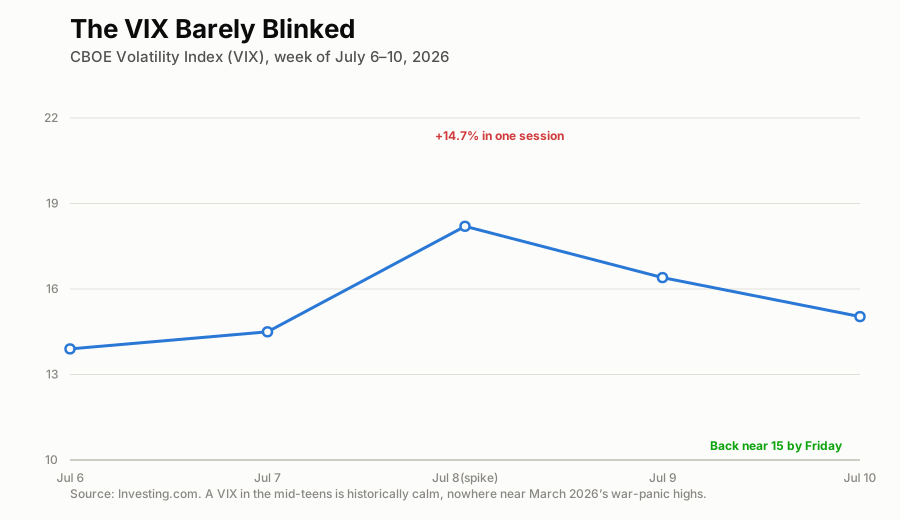
The VIX's week: a real spike on the war restart, fully faded within two sessions.
How To Read The Fade
The five-day move matters more than the spike. A one-day pop is a headline reflex. Sustained elevation across a week means the market expects the turbulence to stick around. This VIX gave back most of its jump inside 48 hours, which is the options market saying, out loud, that Iran War 2.0 gets contained.
The market has seen this movie. Vol blew out much harder during the original March escalation, then collapsed 60% into the June 17 ceasefire. A scenario the market has already survived once gets repriced faster and cheaper on the rerun. Defense stocks showed the identical pattern this week: same headline, one-fifth the reaction. Fear decays with repetition, and it's decaying on schedule.
Term structure backs it up. Spot popped while longer-dated vol barely moved. When the front of the curve jumps and the back end shrugs, the market is pricing a specific, short-lived event rather than a regime change. That's precisely the shape this week printed.
The Thing Vol Is Ignoring
Here's what makes 15 interesting rather than boring. The Iran headline got hedged and faded correctly. Fine. But the same week produced a $1 trillion semiconductor drawdown, Intel down 21%, Micron round-tripping 22%, and bubble indicators printing levels last seen in June 2000. That's the actual systemic risk in this market, it lives inside the index's biggest weights, and index-level vol is priced like it's a rounding error.
An index this concentrated in AI names, with the AI complex this jumpy, deserves a fatter risk premium than 15. The options market is selling flood insurance in a drizzle while the levee cracks upstream.
The Options Angle
The rule that pays for itself: buy protection when the VIX is 15, sell it when it's 30. It's 15.
- VIX calls at the 20 strike, two to three months out. Cheap, defined-cost portfolio insurance. If the chip selloff metastasizes into an index event, these reprice violently and you'll be the only one who owns them at these prices.
- Or SPY puts three to four months out, funded by covered calls on your extended tech winners. Keeps you long the trend with the tail covered, at near-zero net cost while vol is asleep.
- Timing is the entire trade. The same protection cost triple during the March panic. Everyone buys umbrellas in the rain. The edge is buying them now, in the sunshine, from a seller who's stopped believing in weather.
Is 15 Too Calm?
For Iran, no. The market has priced that war twice and faded it correctly twice; the shrug is earned. For the AI complex, 15 is asleep at the wheel. A trillion-dollar sector drawdown inside the index's heaviest weights is exactly the kind of stress that eventually shows up in index vol, and right now the market will sell you the hedge for pocket change. Take the other side of that laziness.
Comments
0 totalNo comments yet. Be the first to drop a take.