The Warsh Fed Faces Its First Real Test on July 29
TL;DR
- Kevin Warsh has been Fed chair since May 22, confirmed 54-45, the narrowest vote for the job in US history. Powell remains on the Board, awkwardly, until an investigation into him fully closes.
- The June meeting was Warsh's debut: a hold, plus a dot plot that swung hawkish, with nine members projecting a hike.
- July 28-29 is the first meeting where his Fed faces real cross-pressure: a war feeding inflation on one side, a 57k jobs print on the other.
- Markets price the July hold as a lock. What they haven't priced is how a chair with the thinnest mandate ever handles his first genuine dilemma, and that's the actual event on the 29th.
The Thinnest Mandate In Fed History
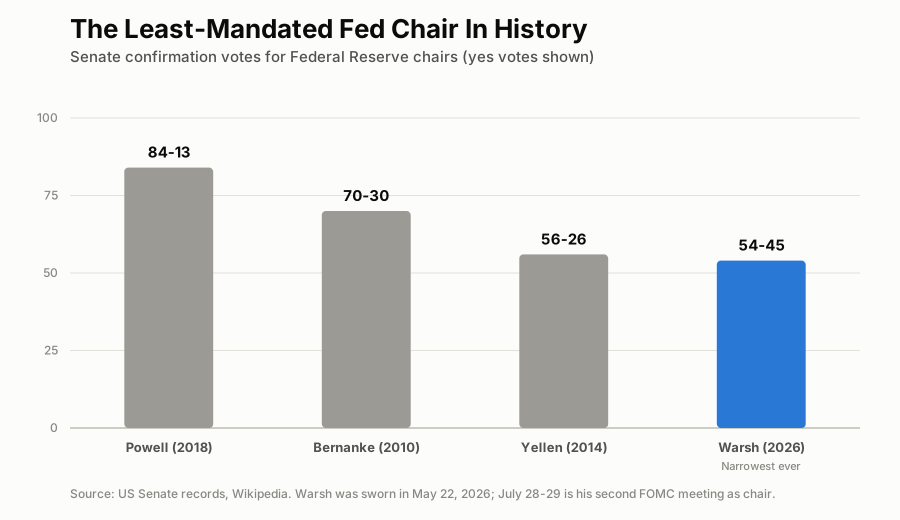
Every modern Fed chair's confirmation vote. Warsh scraped through with less support than any of them.
The backstory matters for markets. Warsh was nominated in January while a federal investigation hung over Powell, watched his own nomination get blocked in committee, and was confirmed 54-45 in May only after the DOJ dropped its Powell inquiry. Powell, whose governor term runs to 2028, is still sitting on the Board and has said he'll stay "for a period of time to be determined."
Why traders should care about the palace intrigue: a chair confirmed on the narrowest margin ever, with his predecessor literally in the room, has less institutional slack than any Fed leader in memory. Every decision gets read through the question "is this the committee or is this politics," and that reading premium shows up in rate volatility. The June dot plot's hawkish swing, one month into his term, already carries an asterisk in half the street's research notes.
What June Told Us About The Warsh Fed
His first meeting produced a hold, a median 2026 rate projection RAISED to 3.8%, and nine members leaning toward a hike. Warsh's long-standing public record leans hawkish (he spent years criticizing easy policy from the outside), and his first dot plot matches the reputation. He also launched task forces reviewing the Fed's communications and data sources within weeks of arriving, which is a new chair signaling that the old playbook is under review. Committees in transition produce surprises; that's not a criticism, it's a pricing input.
The July 28-29 Dilemma
The hold itself is priced above 85% and isn't the event. The event is how the statement and press conference handle an impossible pair of facts:
- The inflation side: war-fed oil, a Hormuz crisis live on the tape, and a June CPI (July 14) that predates all of it. The hawkish case writes itself.
- The labor side: 57,000 June payrolls, 74,000 in downward revisions, participation at a five-year low. The employment mandate is flashing amber, covered in full in the jobs report piece.
A veteran chair with an 84-13 mandate can straddle that with boilerplate. A new chair with a 54-45 mandate, a hawkish reputation to either confirm or shed, and markets pricing 58% September hike odds has to actually choose a lean. Whichever way he leans, roughly half the market is positioned wrong for it.
The Options Angle
- Own rate volatility into the 29th, not a rate direction. The cleanest structure: TLT strangles six to eight weeks out. A hawkish lean sends yields up (puts pay), a dovish surprise from the "hawkish" chair would be a genuine shock (calls pay violently, precisely because nobody expects it from him).
- The asymmetric lottery ticket is the dovish surprise. Everything about Warsh's reputation says hawk, which means dove is the unpriced tail. Cheap TLT calls and gold calls dated past the meeting cost almost nothing and pay 10-to-1 if the new chair decides a 57k jobs print scares him more than $78 oil.
- Skip equity index bets on the meeting itself. FOMC-day index moves under a telegraphed hold are noise. The rate complex is where this meeting's information lands first and cleanest.
The Real Story
Markets spent two decades learning to read Powell's Fed and two decades before that learning Greenspan's and Bernanke's. Warsh's Fed is nine weeks old, mid-war, mid-labor-slowdown, with a dot plot pointing up and a jobs trend pointing down. July 29 is the first time we watch this committee choose under real pressure. Whatever they choose, the tell is the language, and the trade is owning the vol while everyone else pretends they already know the answer.
Comments
0 totalNo comments yet. Be the first to drop a take.