Market Open, July 13: War Over the Weekend, Asia Crashed, and US Futures Barely Care
TL;DR
- Weekend: the US struck roughly 140 Iranian military sites over two nights. Iran retaliated against US bases in Kuwait, Bahrain, Jordan, Oman and Qatar, and declared the Strait of Hormuz "closed until further notice." CENTCOM says it isn't.
- Asia responded with a genuine crash: KOSPI down 8.95%, circuit breaker triggered, SK Hynix down 15.4% in Seoul.
- US futures at the open: Nasdaq 100 -1.2%, S&P -0.5%, Dow -0.4%. Brent +3.3% to $78.50. Gold DOWN 1.2%.
- The muted US reaction is the story. And the biggest earnings week of the quarter starts tomorrow morning.
The Board This Morning
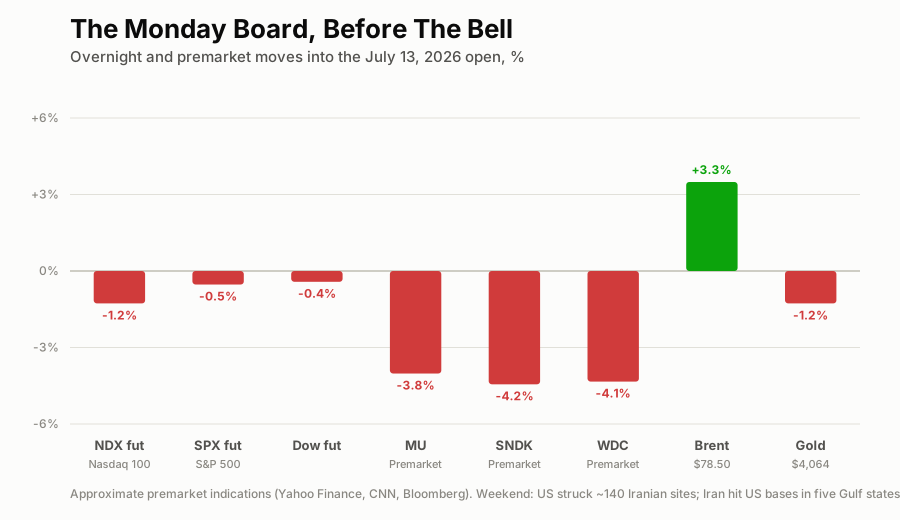
The overnight scorecard: a war escalation priced as a chip-sector problem.
Read that chart carefully, because it's not the board a war usually produces. Index futures are down less than the average Tuesday. The real damage is concentrated in exactly one place: memory stocks, down 4% premarket, imported directly from Seoul's 9% faceplant. Oil is up a contained 3%. And gold, the asset every textbook says should be screaming higher this morning, is down 1.2% at $4,064.
What Happened While You Were At The Lake
Saturday and Sunday delivered the sharpest escalation since the ceasefire collapsed. Two nights of US strikes on Iranian military infrastructure. Iranian missiles at American bases across five Gulf states. Then the headline that would have produced limit-down futures in any previous decade: Iran declaring the Strait of Hormuz, corridor for a fifth of the world's oil, closed indefinitely. CENTCOM's response was to keep escorting tankers through it and call the closure fiction.
The market is siding with CENTCOM. Brent at $78.50 is up 3%, nowhere near April's $126 panic peak, and the pattern matches everything we wrote in the $100 oil piece: declared closures are rhetoric until tanker traffic actually stops, and tanker traffic hasn't stopped.
Why US Futures Are Only Modestly Red
Three reasons, in order of honesty. First, the market has now priced this war three separate times since March and each repricing gets smaller; that's the war-fatigue pattern that's been visible in defense stocks for a month. Second, the S&P's actual sensitivity runs through oil and CPI, and a 3% oil move doesn't move the inflation needle. Third, the selling that IS happening has a cleaner explanation than the war: Asia's memory crash was profit-taking with a Korean catalyst, and it's dragging the Nasdaq's chip complex, full breakdown in today's KOSPI piece.
Watch gold for the tell. Down 1.2% on the most escalatory weekend in months means positioning is exhausted, the safe-haven bid is dead, and the market genuinely believes this stays contained. Gold has been the most honest war gauge all year and it's yawning.
What To Expect This Week
- Today: chips heavy, energy bid, indices resilient. The playbook says this dip gets bought unless Hormuz visibly, physically closes. Watch whether MU and SNDK hold their morning lows; that's the sentiment read for the whole AI complex.
- Tuesday: five megabanks report before the open, and June CPI hits at 8:30am the same morning. War volatility is revenue for the bank desks; war oil is a threat to the CPI print.
- Wednesday: PPI, the quieter inflation cross-check on Tuesday's CPI.
- Thursday: Netflix and TSMC. TSMC's guidance is the health check for the entire wounded chip trade.
The Options Angle
- Sell the war headline, again. SPY put credit spreads 30 to 45 days out below the 7,450 support zone were the trade last week and the weekend just repriced them wider. Same trade, better premium.
- Let the memory knife hit the floor first. MU at $940 premarket is tempting and early. The Korean flush needs a green close before the US names are safe; the level to stalk on MU remains $900.
- If you're overweight tech into Tuesday's CPI, buy the cheap index hedge now. VIX closed Friday at 15; Monday's fear premium is still modest. A two-week SPY put costs lunch money against a CPI print that lands hot on war-inflated oil.
The One-Line Read
A war escalation the market has rehearsed, an Asia crash with a local catalyst, and index futures acting like it's a normal Monday: today is a chip-sector event wearing a geopolitics costume, and the week's real risk still lands Tuesday at 8:30am.
Comments
0 totalNo comments yet. Be the first to drop a take.