SpaceX Lock-Up Schedule: Every Date $116 Billion of SPCX Shares Unlocks, From August 6 to December 8
SPCX earnings on August 4 trigger the first unlock, then 911.5 million shares worth about $116 billion release in stages through December 8. The full calendar and what each date does.
TL;DR
- August 4: SpaceX reports Q2 results, its first earnings since listing. The report itself triggers the first unlock, so the date matters twice.
- August 6: roughly 911.5 million shares, worth about $116 billion, become eligible to trade. For scale, the entire IPO sold 555.6 million shares.
- Then it keeps coming: 7% tranches every two to four weeks from August through October, a roughly 28% release tied to Q3 earnings, and all remaining 180-day shares on December 8, 2026.
- Musk and a select group of insiders stay locked until mid-2027. That is the one piece of good news in the calendar.
- SPCX priced at $135 on June 12 in the largest IPO ever, $86 billion raised, and closed around $113.50 on July 28. It is already below the IPO price and the supply has not started yet.
The Full Unlock Calendar
This is a schedule, not an opinion. Put these dates in a calendar.
| Date | Event | Approximate release | |---|---|---| | August 4 | Q2 2026 earnings, first as a public company | Triggers the first tranche | | August 6 | First shares become eligible | ~911.5m shares, ~$116bn | | Aug to Oct | Rolling tranches every 2 to 4 weeks | ~7% each | | Q3 earnings | Earnings-triggered release | ~28% | | December 8 | All remaining 180-day shares | Balance | | Mid-2027 | Musk and select insiders | Locked until then |
Two features of that table deserve emphasis.
The first tranche is bigger than the IPO. SpaceX sold 555,555,555 Class A shares at $135 to raise a record $86 billion. The August 6 eligibility covers roughly 911.5 million shares. More stock becomes sellable in one day than the entire offering that created the public float.
This is a staircase, not a cliff. Standard lock-ups end on one date and the market braces for one bad session. SpaceX staggered it: 20% after Q2 earnings, then 7% every two to four weeks through October, then a large earnings-triggered slug at Q3, then the remainder on December 8. That design reduces the size of any single shock and replaces it with something arguably worse for a stock already falling: four months of continuous, scheduled, known supply.
The Board
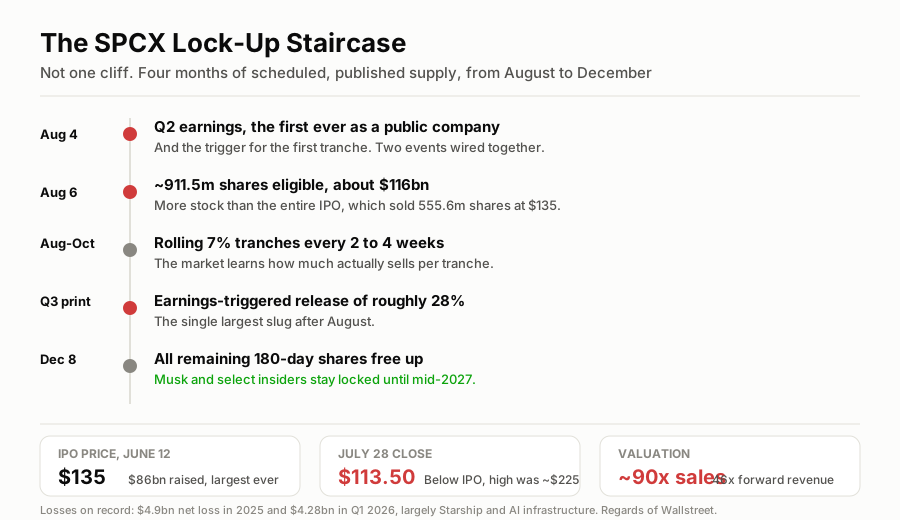
Not a cliff. A staircase, running from August to December.
Why August 4 Is the Date That Matters Most
Because it does two jobs at once, and most coverage only mentions one.
Job one: it is the first earnings report SpaceX has ever filed as a public company. Nobody has modelled this business against a real disclosure. The losses on record are large: a $4.9 billion net loss in 2025 and another $4.28 billion in Q1 2026, driven largely by Starship development and AI infrastructure spending. Those are the numbers investors have. What Q2 looks like, and what management says about the path, is genuinely unknown.
Job two: the report triggers the unlock. The first roughly 20% tranche is tied to Q2 earnings, with shares eligible from August 6. So a bad print does not just reprice the stock, it releases supply into the reprice two days later. A good print does the reverse: it gives early holders a better level at which to sell.
That is an unusual and unkind structure. The event with the most uncertainty is wired directly to the event with the most supply.
What the Valuation Can Absorb
Here is the honest arithmetic, and it is where our existing view comes from.
SPCX carries a market capitalisation around $1.54 trillion. On the numbers in our piece on SPCX below its IPO price, that is roughly 90x trailing sales and about 46x forward revenue, against Rocket Lab near 63x and legacy aerospace near 2x. The forward multiple only makes sense if revenue roughly doubles toward $36 billion.
One correction to our own earlier work while we are here. That piece described the lock-up as a single early-December expiry and built a December put spread around the idea of one flush. The staged schedule above supersedes that framing: the first and largest tranche arrives in August, and December is the tail rather than the event.
Now layer the share price path on it. The stock priced at $135, reached about $225 at its high, and closed near $113.50 on July 28. It has given back the entire post-IPO gain and then some, before a single locked share has been sold.
A 90x sales multiple is a promise about the future. Four months of scheduled selling is a fact about the present. Multiples that high need scarcity of stock to hold, and scarcity is precisely what this calendar removes.
What Actually Happens on an Unlock
Worth being clear, because the popular version is wrong.
"Eligible to trade" is not "will be sold." The 911.5 million figure is what becomes permitted, not what hits the tape. Employees hold for tax reasons, conviction, or because they cannot sell into weakness without crystallising a loss. Historically, actual selling into a large unlock is a fraction of the eligible amount.
But the price reacts before the selling, not after. Markets front-run known supply. The typical pattern is weakness in the days before an unlock date as traders position for it, then a relief bounce if the feared selling does not materialise. That means the tradeable event is the anticipation, not the event.
And repeated tranches train the market. Because this schedule repeats every two to four weeks, each date becomes a smaller, more predictable version of the same setup. By October the market will have learned how much supply actually arrives per tranche, and the reaction should compress.
The Playbook
- Do not buy SPCX before August 4. You would be taking an unmodelled first earnings report and a supply trigger in the same week, for no compensation.
- The dates to watch are the two or three days before each tranche, not the tranche itself. That is when positioning pressure shows up.
- Musk being locked until mid-2027 is genuinely important. The largest holder cannot sell, which removes the worst-case supply scenario for eighteen months. Weigh that against everything above.
- If you want the space theme without the calendar, own something else. Rocket Lab trades at a lower multiple with no unlock overhang. Owning SPCX specifically through August to December is choosing to fight a known supply schedule.
- For options, this is the rare case where a defined-risk bearish structure has a genuine edge in the timing, because the supply dates are published. But implied volatility already reflects them, so you are not getting the calendar for free. Read calls and puts explained before expressing this with anything short-dated.
- The bull case against all this: SpaceX is the most strategically important private company of the era, Starlink revenue compounds, and a first earnings report that shows the losses narrowing would reframe the whole multiple. If Q2 is strong, the unlocks get absorbed and December looks like the bottom. That path exists. It requires the print on August 4 to be good.
The One-Line Read
SpaceX reports on August 4 and that same report opens the gates on roughly 911.5 million shares, about $116 billion worth, eligible from August 6 and followed by 7% tranches every two to four weeks until the last 180-day shares free up on December 8: the stock is already below its $135 IPO price at around 90x sales, and a multiple that high needs scarce stock, which is exactly what this calendar spends four months removing.
More on Earnings
$MSFT · 2026-07-30
Why Did Microsoft Pump 9%? Four Things Converged, and the Fourth One Nobody Predicted
$AMZN · 2026-07-29
Amazon Reports Tonight: AWS Up 31% Expected, $207 Billion of Capex Priced, and Microsoft Just Set the Bar
$AAPL · 2026-07-29
Apple Reports Tonight: $108.9 Billion Expected, iPhone Up 23%, and Tim Cook's Last Earnings Call as CEO
The Sunday Setup
Enjoyed this breakdown? Don’t miss the next market setup.
Get deep-dive analyses delivered to your inbox every Sunday. Free, and built for retail investors.
Comments
0 totalNo comments yet. Be the first to drop a take.