When Does Home Depot Report Earnings? August 18, and Flat Earnings Are the Story
Home Depot reports Q2 2026 before the market opens on Tuesday August 18. Consensus is $4.71 EPS against $4.68 a year ago. Why a flat number is the most interesting print of the month.
TL;DR
- Home Depot reports Q2 2026 before the market opens on Tuesday, August 18.
- Consensus: diluted EPS of $4.71, against $4.68 a year ago. That is growth of well under one percent.
- A flat earnings line is the story. Home Depot is the clearest listed read on the housing market, and housing is where high rates bite hardest.
- It reports the day before Cisco and two days before Walmart, making that stretch the consumer week of the month.
- The line to watch is comparable sales, split between the do-it-yourself customer and the professional contractor.
When Does Home Depot Report Earnings?
The short answer: before the market opens on Tuesday, August 18, 2026.
Reporting pre-open means the reaction is a 9:30am gap rather than an after-hours drift, with the usual wide spreads in the first minutes.
What the Street Expects
| Line | Q2 2026 | Year ago |
|---|---|---|
| Diluted EPS | $4.71 | $4.68 |
| Growth | under 1% | |
| Report time | Before the open, August 18 |
$4.71 against $4.68 is essentially flat. For a company of Home Depot's quality, that is a more informative number than a big beat or miss would be, because it tells you the underlying business has stopped growing rather than that a quarter went well or badly.
The Board
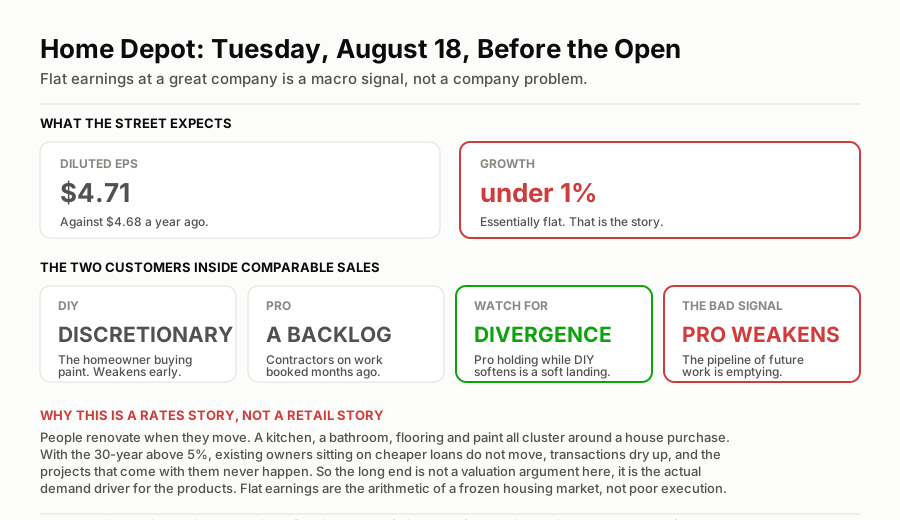
Flat earnings at a great company is a macro signal, not a company problem.
Why Home Depot Is a Rates Story
Home improvement demand is downstream of housing turnover, and housing turnover is downstream of mortgage rates.
The mechanism is direct. People renovate when they move. A new kitchen, a new bathroom, new flooring and new paint cluster around a purchase. When mortgage rates are high, existing owners sitting on cheaper loans do not move, transactions dry up, and the projects that come with them never happen.
That is why the 30-year Treasury above 5% matters more to Home Depot than to most retailers. It is not a discount-rate argument about the stock's valuation. It is the actual demand driver for the products. We set out how that rate move is transmitting through markets in the bear steepener explainer, and Home Depot is where it shows up in a P&L.
Flat earnings, in that context, are not a failure of execution. They are the arithmetic of a frozen housing market.
The Two Customers
The split inside comparable sales is the most useful disclosure in the release.
The DIY customer is the homeowner buying paint and tools. This is discretionary, it responds fast to sentiment, and it weakens early when households feel squeezed.
The Pro customer is the contractor buying in volume for a job already commissioned. Pro spending is a backlog indicator: it reflects work that was booked weeks or months ago, so it holds up longer and falls later.
Watch for divergence. Pro holding up while DIY weakens means households are cautious but committed projects continue, which is a soft landing. Pro weakening is the more serious signal, because it means the pipeline of future work is emptying, and that shows up in Home Depot's numbers before it shows up in housing data.
The Options Angle
- Home Depot is a low-volatility earnings name by megacap standards. Implied moves are typically modest, which makes buying calls or puts into the print an expensive way to express a view that will probably resolve in a 2% move.
- The mechanics still argue for defined risk: it reports pre-open, so a losing position cannot be managed before it gaps.
- This is a natural covered call candidate for holders. A stock with flat earnings and a stable dividend is unlikely to run away from a sensibly struck call, and the income is the point.
- Cash-secured puts suit anyone who wants to own it cheaper. The honest framing is that you would be selling puts on a rates bet, so size it as one.
- The genuine upside case is not this quarter. It is the first sign that rates are coming down, at which point frozen housing turnover unfreezes and years of deferred projects arrive at once.
The One-Line Read
Home Depot reports before the open on Tuesday August 18 with consensus of $4.71 against $4.68 a year ago, and that flat line is the most informative number of the month: home improvement demand depends on housing turnover, housing turnover depends on mortgage rates, and with the long end above 5% nobody is moving, so the thing to watch is not the EPS headline but whether Pro comparable sales are holding while DIY softens, because Pro is a backlog and backlogs empty last.
More on Earnings
$WMT · 2026-08-01
When Does Walmart Report Earnings? August 20 at 7:00am ET, and It Is the Consumer Verdict
$UBER · 2026-08-01
When Does Uber Report Earnings? August 5 Before the Open, and Options Price an 8.3% Move
$DIS · 2026-08-01
When Does Disney Report Earnings? August 5 Before the Open, With $1.88 Expected
The Sunday Setup
Enjoyed this breakdown? Don’t miss the next market setup.
Get deep-dive analyses delivered to your inbox every Sunday. Free, and built for retail investors.
Comments
0 totalNo comments yet. Be the first to drop a take.