The Iran War Just Made JPMorgan a Record $16.9 Billion
JPMorgan posted a record $16.9B quarterly profit as Iran-war volatility juiced its trading desk. Goldman, Citi, BofA and Wells all beat and rallied. What the bank tape says about the consumer and where financials go next.
TL;DR
- JPMorgan posted a record $16.9 billion Q2 profit, with equities trading revenue lifted by the exact Iran-war volatility the rest of the market keeps calling "contained."
- Goldman, Citi, Bank of America and Wells Fargo all beat and all rallied. JPM +2.8%, GS +3.4%. Financials were the cleanest green on a split-screen day.
- We called this setup a week ago: war is chaos for everyone except the desks that trade the chaos.
- The bigger tell isn't the profit. It's what the banks said about credit, and so far, the consumer isn't cracking the way the jobs data feared.
More on $JPM: Five Megabanks, a CPI Print, and Netflix Walk Into One Week →
The Winners' Board
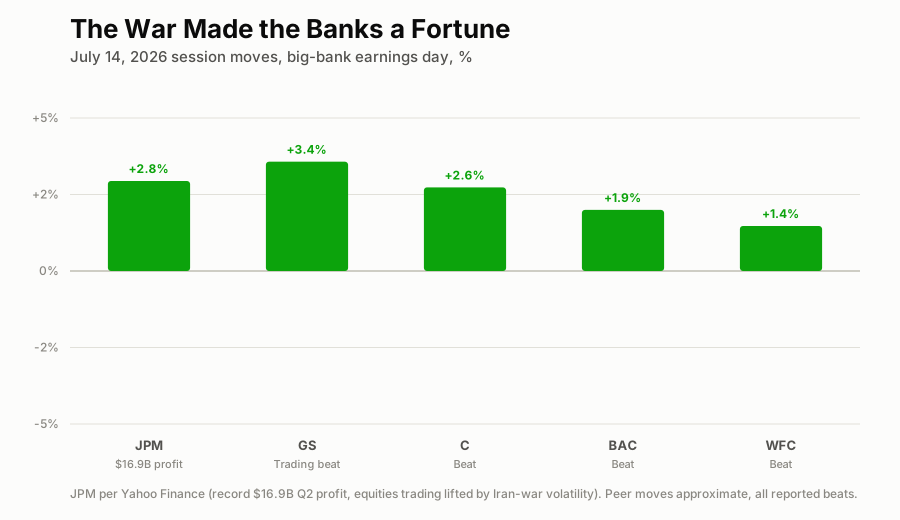
Earnings day for the banks, and every one of them showed up green.
Chaos Is a Business Model
The through-line of 2026 has been volatility: a war that keeps escalating and de-escalating, a $1 trillion chip selloff, the biggest foreign IPO in history, oil round-tripping from $126 to $71 and back. For most of the market that's been a series of things to survive. For the banks' trading desks, it's been a firehose of revenue. Every panic needs a counterparty, every hedge needs a market-maker, and JPMorgan's equities division has spent the whole year taking a cut of the fear.
That's why the record $16.9 billion print matters beyond the headline. It confirms the one clean way to be long the war's volatility without guessing its direction: own the house that books the flow. While everyone else was hedging Iran, the banks were billing for the hedges.
The Part That Actually Matters: Credit
The trading windfall is the loud story. The quiet one is credit quality, and it's the more important read. June's 57k jobs report raised a real fear that the consumer is buckling under higher-for-longer rates. The banks' loan books are the highest-frequency, largest-sample view of that consumer anywhere, so their provisions and charge-off commentary are worth more than any sentiment survey.
So far the banks are not corroborating the stagflation panic. Beats across the board, with net interest income holding and provisioning not spiking, says the consumer is bending, not breaking, at least through June. That's a genuine data point against the "labor market is cracking" thesis, and it's why the banks rose on a day the Dow fell. If the consumer were actually rolling over, these prints would have carried a warning, and they didn't.
Watch the language, though. Banks positioning for a September Fed move telegraph it in their net-interest-income guidance before Warsh telegraphs it in a statement. That's the Warsh Fed's tell hiding in plain sight in the bank calls.
Where Financials Go From Here
The setup stays favorable and it's underappreciated. Banks win in the exact regime the market is actually in: sticky rates (fat net interest margins), high volatility (fat trading revenue), and a consumer that's soft but not collapsing (manageable credit costs). That's a rare trifecta, and it's the mirror image of the AI-multiple trade that just got IBM'd. When the glamour names wobble, the boring compounders that print $16.9 billion look a lot more attractive.
The risk to the thesis is a genuine credit event, a real recession that turns "bending" into "breaking." The June prints say that isn't here yet, and the August 7 jobs report is the next place to check.
The Options Angle
- Sell JPM put spreads into strength, don't chase the pop. The setup we flagged last week paid; now IV is elevated post-print and the stock is up. Selling 30-to-45-day put spreads below support banks the earnings premium on a name that just proved the trifecta.
- XLF calls are the cleaner sector expression than any single name. If sticky-rates-plus-volatility persists (and the Fed is telling you it will), the whole financials complex re-rates. Two-to-three-month XLF calls capture the trifecta without single-stock earnings risk.
- The pairs trade writes itself: long financials, short high-multiple software. Today handed you both legs. Banks own their cash flows; the SaaS names that just cratered are renting theirs. That divergence has quarters left in it.
The One-Line Read
The banks just proved that in a year defined by volatility, the smart position wasn't guessing which way the war went, it was owning the desks that traded it. Record profits, a consumer that's bending not breaking, and a rate backdrop built for their business model. On a day the glamour trade fell apart, the boring one printed money.
Next up:PPI, tomorrow at 8:30am ET →
More on $JPM
Updated Every Saturday
The Week Ahead
Every earnings date, Fed event and setup for the current trading week, on one page.
Refreshed Weekly
Earnings Calendar
Who reports next, when, and what consensus and the whisper expect.
The Week-Ahead Brief
Don’t miss next week’s setups. Get the Sunday brief.
Latest issue, Sep 7“Week ahead in the stock market...”
Every Sunday: next week’s earnings dates, Fed days and the trades worth watching, from the same desk that writes the week-ahead hub. Free, built for retail investors.