Iron Condor Explained: How Traders Get Paid When Nothing Happens
Getting Paid For The Stock To Do Nothing
Every strategy so far needed the stock to move. The iron condor is the first one that gets paid when the stock does absolutely nothing, which sounds like free money right up until you meet the fine print.
Here's the idea, built one piece at a time. Stock's at $100. You bet it stays boxed in, so you sell an option below it and sell one above it (the $90 put and the $110 call) and collect premium from both. If the stock naps between them, both expire worthless and the cash is yours. That pair by itself is a short strangle: nice income, but with a fatal flaw: an unlimited loss if the stock runs away in either direction.
So you buy bodyguards. You buy the $85 put and the $115 call (cheaper, further-out options) that cap your loss no matter how far the stock travels. Now you've got four legs, and the shape is a flat-topped mesa. The whole package collects a $150 credit. Drag the slider and watch where you win:
At $100 you're up $150.
Read The Mesa
Slide anywhere between $90 and $110 and the number holds steady at +$150. That's the landing strip: a full 20 points wide, with the stock starting dead center. Every option in the structure expires worthless and you keep the entire credit. Most weeks, on most stocks, this is exactly what happens, which is why the trade feels like a money printer for its first several months.
Now shove the slider past a wing. The loss stops at −$350 and goes no further: the bodyguards did their job. Your break-evens sit at $88.50 and $111.50.
Here's the part the brochure skips, and it's right there in the two stat tiles. You're risking $350 to make $150. The condor loses more than twice what it wins, so the entire game is win rate. Winning 70% of the time sounds great and is a slow bleed at this payout. The trade only earns its keep when the market's priced move is fatter than the move that actually shows up, which means condors are best sold when premium is juiced: elevated volatility, scared markets, expensive options. Selling calm markets for pennies is how the strategy earned its nickname: picking up nickels in front of a steamroller.
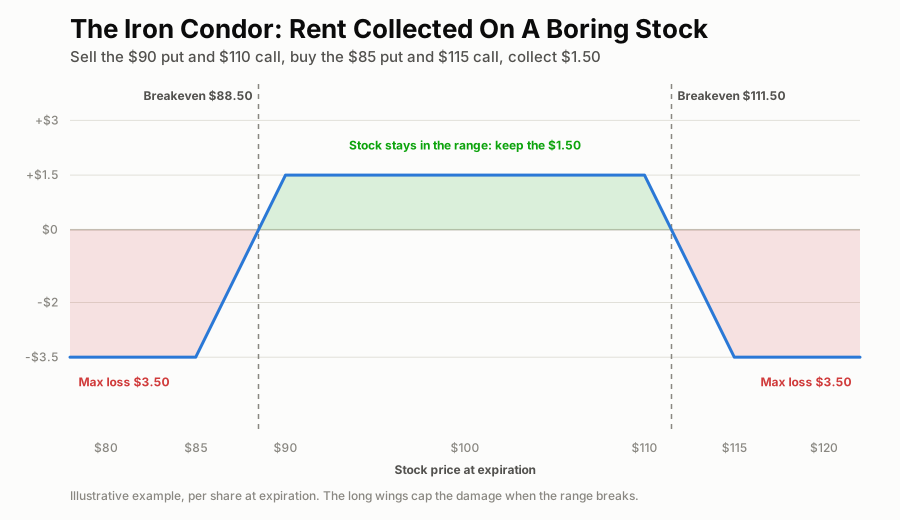
The mesa: full profit anywhere between $90 and $110, worst case capped at $350 by the wings.
The Two-Line Version
- An iron condor sells a put spread and a call spread around the stock and collects a credit up front.
- You keep the full credit if the stock stays inside the short strikes through expiration.
- Max loss is capped by the long wings: spread width minus the credit. No unlimited-loss horror stories.
- It's short volatility and long time. Its natural predator is the one big move you decided wasn't coming.
How It Actually Loses
Nobody hits max loss because the stock politely drifted there. They lose on the gap: the surprise guidance cut, the CEO resignation, the macro print that relocates the stock 12% before the open while your short strike just watches. The condor's enemy is the event, which is why experienced sellers check the calendar before the chart. Earnings inside your expiration window? You're either doing that on purpose, with the fat premium priced for it, or you're a tourist about to get schooled.
The other classic bleed-out is defending too late. A condor breached on one side is a directional bet you never wanted. The standard playbook: take profits early (half the credit is a common target, since the last few dollars carry the most gap risk) and close or roll the tested side when the stock knocks on a short strike, instead of praying for a bounce.
The Bird Has A Mirror Image
Flip every leg (buy the spreads instead of selling them) and you get the reverse iron condor: pay a small debit, profit on a big move either way, with both profit and loss capped. Same skeleton, opposite religion. The condor sells chaos insurance; the reverse condor buys it; and the fair question before either trade is which side of that policy is mispriced this month. The uncapped cousin of that long-chaos bet is the straddle, if you'd rather pay more for unlimited wings.
Rent Collector Or Bagholder?
The iron condor is a genuinely good strategy wearing a dangerous marketing campaign. Defined risk, high win rate, profits from the one thing markets do most (nothing). The failure mode is the seller who mistakes a high win rate for a high edge, sizes up after ten green trades, and hands it all back on one gap. Sell condors when volatility is expensive and the calendar is clear, keep positions small enough that max loss is an annoyance rather than an event, and the rent checks are real.
The Week-Ahead Brief
Don’t miss next week’s setups. Get the Sunday brief.
Latest issue, Oct 11“September CPI, the big banks and TSMC: earnings season starts”
Every Sunday: next week’s earnings dates, Fed days and the trades worth watching, from the same desk that writes the week-ahead hub. Free, built for retail investors.