Arbutus (ABUS) Tender Offer: The $230M Dutch Auction Math
Arbutus opens a modified Dutch auction tender offer for up to $230 million of ABUS stock at $5.00 to $5.75 a share, funded by its Moderna patent settlement, through September 29.
TL;DR
- Arbutus Biopharma (ABUS) is expected to open a modified Dutch auction tender offer on or about August 24, offering to buy back up to $230 million of its own stock at $5.00 to $5.75 a share. The window is expected to run through on or about September 29, 2026, per the company's SEC filing.
- The money comes from Moderna. Arbutus's own share of a global patent settlement, $178.4 million, landed on July 8. A further $1.3 billion is contingent on the outcome of Moderna's appeal.
- The stock already trades inside the tender's own price band. ABUS closed Friday, August 21, at $5.21, up 9.22% on the announcement, comfortably between the $5.00 floor and $5.75 ceiling.
- The arithmetic is a real haircut to the share count. At the top of the range, $230 million buys back 40 million shares, about 20% of the 197.8 million outstanding. At the bottom, it is closer to 23%.
- The tender itself is not the interesting number. A second Moderna payment worth up to $1.3 billion, more than five times the buyback, still hangs on an appeal ruling nobody has a date for.
More on Single Stocks: Options Scorecard: A Reddit Put and a Nutanix Pass, Both Right at Expiry →
What Is Arbutus Offering, and Through When?
Arbutus intends to repurchase up to $230 million of its common shares through a modified Dutch auction tender offer, priced between $5.00 and $5.75 a share. The company's own filing says the offer is expected to commence on or about August 24, 2026, and expire on or about September 29, 2026, unless extended.
That is five weeks for holders to decide, and the filing carries the usual hedge: Arbutus says there is no assurance the offer actually commences on schedule, since it still needs exemptive relief from US and Canadian securities regulators before it can proceed.
How a Modified Dutch Auction Actually Works
A shareholder who wants to tender picks a price inside the $5.00-$5.75 band, or elects to tender "at the price determined," and hands over shares at that price if the company's stock clears there. Arbutus then finds the single lowest price inside the range that lets it buy the full $230 million from everyone who tendered at or below that level. Everyone who clears gets paid the same price, regardless of what they individually bid, and withholding taxes come out of the payment.
If more shares are tendered at the clearing price than the deal needs, Arbutus prorates: the oversubscribed shares get bought pro rata rather than first-come-first-served. Regards of Wallstreet's coverage of the RE/MAX cash-or-stock election ran the same proration math for a merger consideration collar, and it applies here in the same way: the price the market settles the stock at before the deadline is already a bet on where the clearing price and the proration rate land.
Where the $230 Million Actually Comes From
Arbutus and its partner Genevant Sciences settled a global patent dispute with Moderna in March over the lipid nanoparticle delivery technology used in Moderna's Covid vaccines. The total settlement was $2.25 billion, split into a $950 million noncontingent payment and up to $1.3 billion contingent on Moderna's appeal under 28 U.S.C. §1498.
Arbutus's own 10-Q is specific about its own cut: $178.4 million, received July 8, which "included reimbursement of the Company's litigation costs." That is Arbutus's own slice of the noncontingent payment. The $2.25 billion figure describes the whole deal, split between Arbutus and Genevant, and quoting that total against Arbutus's own buyback makes the company look like it is spending more than it actually banked.
Run the cash math. Arbutus held $92.6 million in cash and marketable securities as of June 30, before the settlement money arrived. Add the July 8 payment and pro forma cash is roughly $271 million, before any of the ordinary quarter's R&D burn on its two lead programs, imdusiran (AB-729) and an oral PD-L1 inhibitor, AB-101, both aimed at chronic hepatitis B. A $230 million tender against $271 million of cash is not a token buyback: it is close to everything the settlement brought in, funding a repurchase equal to a fifth of the company.
The Board
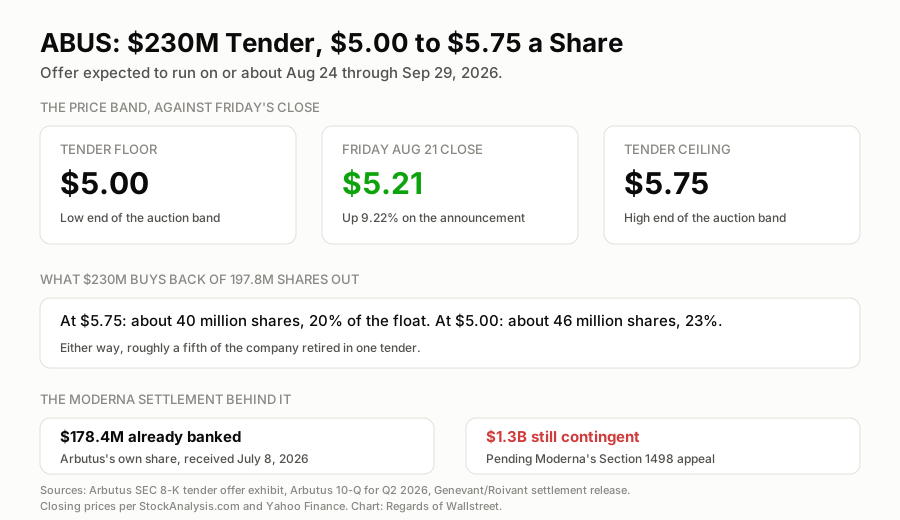
The tender offer window runs on or about August 24 through September 29, 2026.
The Math on Tendering Versus Holding
At Friday's $5.21 close, ABUS already sits inside its own tender collar, which is the detail the excited headlines about a "9% pop" leave out. A holder who tenders at the top of the range locks in $5.75, a further 10.4% above Friday's close, but only if the auction actually clears there, and only on the fraction of shares the proration formula lets through.
The offer buys back 20-23% of the company depending on where it clears, and that ceiling only covers every tendered share if total tenders land under $230 million at the clearing price. A stock that just jumped 9% on the news makes that look unlikely. Proration is the likely outcome, the same way RE/MAX holders got roughly 87% cash elections filled at less than 20 cents on the dollar once that deal's cash cap bound.
Holding instead of tendering has its own logic. A shareholder who sits out keeps a larger percentage stake in whatever is left after the buyback retires a fifth of the float, and keeps full exposure to the two things the tender price ignores entirely: the contingent settlement payment and Arbutus's roughly 16% equity stake in Genevant, which is expected to pay Arbutus a dividend of its own once Genevant's parent, Roivant, distributes its own share of the settlement.
What the $5.75 Ceiling Leaves Out
The tender offer prices ABUS at $5.00 to $5.75. The company's own disclosed contingent claim, $1.3 billion pending Moderna's §1498 appeal, works out to roughly $6.57 a share before any discount for the appeal actually resolving in Arbutus's favor, on top of whatever the core hepatitis B pipeline is worth on its own. I'm not going to pretend I know how a federal circuit panel rules on a government-contractor immunity appeal, and neither does anyone selling into this tender at $5.75. What I'd watch is that gap between the tender ceiling and the back-of-envelope contingent value, wider than anything the auction mechanics themselves can move.
The Options Angle
No trade here. ABUS options exist and Barchart quotes 30-day implied volatility around 42.8%, but that reading came with an IV rank of zero, which does not square with a stock that just moved 9.2% in a single session, so I don't trust the feed enough to price a structure against it. Even with a clean chain, a tender offer with a hard $5.75 ceiling caps the mechanical case for buying calls into the September 29 window: the company itself will not pay above $5.75 for the shares it wants, and nothing forces the market to either.
Trade log
| # | Stance | Structure | Strikes and expiry | Cost or credit | Spot at writing | Implied move | Conviction | Breakeven |
|---|---|---|---|---|---|---|---|---|
| 1 | Pass | Long ABUS common, chasing the tender | N/A | N/A | $5.21 | N/A | 5/10 | needs full fill at $5.75 to beat spot by 10.4% |
| 2 | Pass | Any directional options structure | N/A, no reliable chain sourced | N/A | $5.21 | ~43% (unverified) | 4/10 | N/A |
The One-Line Read
Arbutus is handing back a fifth of the company at a price the market has already matched, while sitting on a $1.3 billion claim the tender doesn't touch. That claim, not the auction, is the trade worth watching.
Related coverage: Moderna's own quarter, the settlement's other side, how the RE/MAX cash-or-stock proration math played out, and the full scored history of calls like these two passes is in the Track Record ledger. First-time readers on options mechanics can start there.
Next up:CPI, Wednesday at 8:30am ET →
More on Single Stocks
Updated Every Saturday
The Week Ahead
Every earnings date, Fed event and setup for the current trading week, on one page.
Refreshed Weekly
Earnings Calendar
Who reports next, when, and what consensus and the whisper expect.
The Week-Ahead Brief
Don’t miss next week’s setups. Get the Sunday brief.
Latest issue, Sep 27“Micron, PCE and the jobs report that decides October”
Every Sunday: next week’s earnings dates, Fed days and the trades worth watching, from the same desk that writes the week-ahead hub. Free, built for retail investors.