Tencent Q2 2026 Earnings: Games Reaccelerate to 17%, but AI Capex Nearly Triples
Tencent beat Q2 2026 revenue at RMB 204.8bn as domestic games reaccelerated to 17%, but profit missed estimates after capex jumped 65% quarter on quarter to RMB 52.8bn.
Updated August 12 after the Hong Kong close with reported results. The preview's own question, whether the gap between gross receipts and recognised games revenue would close, resolved bullish: domestic games reaccelerated to 17%. The margin question resolved the other way: capex nearly tripled year on year and profit missed.
TL;DR
- Tencent reported Q2 2026 revenue of RMB 204.8 billion, up 11%, clearing the roughly RMB 202.2 billion sell-side consensus this preview flagged, and reversing Q1's miss.
- Domestic games revenue jumped 17%, a sharp reacceleration from Q1's 6% and well above the 6.3% the Street had modeled for the whole games segment. International games slipped 1% as reported (up 4% in constant currency), a reversal from Q1's 13% gain, on currency and two Supercell titles fading.
- Marketing services revenue rose 22% to RMB 43.6 billion, beating the 18.1% consensus and again the strongest line in the business.
- Profit attributable to equity holders was RMB 56.0 billion, up just 0.7% year on year, missing a roughly RMB 61.8 billion estimate by about 9%. Operating profit was RMB 67.3 billion, up 12%. The gap between an 11% revenue beat and a profit miss is the capex line below.
- Capital expenditure hit RMB 52.8 billion, up 65% quarter on quarter from Q1's RMB 31.9 billion (roughly 176% year on year), and free cash flow turned negative. This preview called profit growth below revenue growth "the base case, not the risk case"; the actual gap was wider than the base case assumed. The US-listed ADR (TCEHY) fell 5.4% to $56.28 in the August 12 regular session, the first session to trade with the print in hand; Hong Kong's own August 12 close, down about 2%, printed roughly two and a half hours before the release and is not a reaction to it.
More on AI & Semiconductors: Options Scorecard: The Week of August 24, Graded (4 Calls, 75% Right) →
When Does Tencent Report Earnings?
Wednesday, August 12, after the Hong Kong close. The ADR trades on the reaction during the US session that follows; the week's full slate, including July CPI the same morning, is in the earnings calendar.
The Board
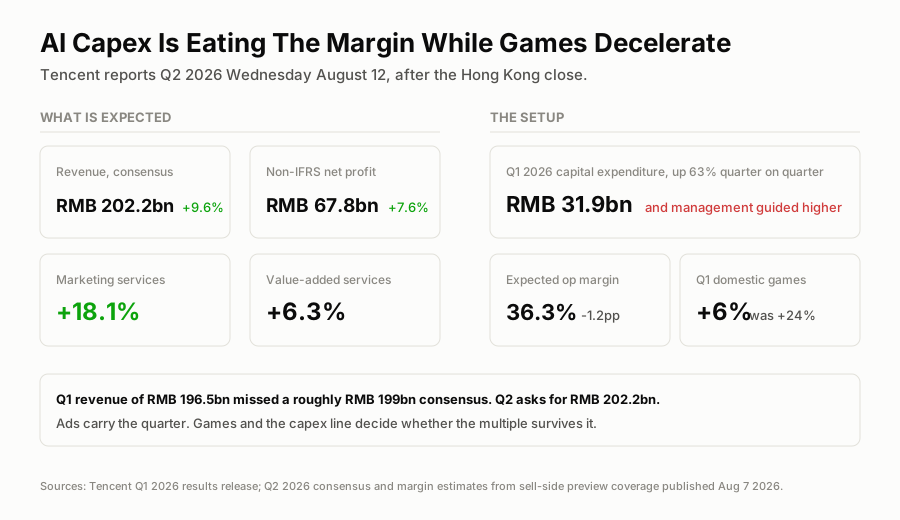
Revenue beat to RMB 204.8bn on a 17% swing in domestic games. Profit missed on a capex line that nearly tripled.
The Games Number Resolved Bullish
For most of the last decade Tencent's domestic games line was the closest thing global equities had to an annuity. Q1 2026 growth had slowed to 6%, against 24% a year earlier, and this preview flagged the open question as whether that was timing (deferred revenue from a later Spring Festival) or the franchise maturing.
The Q2 print answers it: domestic games revenue rose 17%, roughly triple Q1's pace, on Delta Force, Valorant PC, Valorant Mobile and Roco Kingdom: World. The gross-receipts-versus-recognised-revenue gap this preview said to watch did what a timing story should do: it closed, and the annuity looks intact rather than matured.
International games moved the other way, down 1% as reported (up 4% in constant currency), a reversal from Q1's 13% gain. Wuthering Waves and Valorant PC grew; two Supercell titles did not, and the yen and other currencies took a bite off the headline. Domestic strength more than covered it: combined games growth beat the 6.3% the sell side had modeled for the whole value-added services segment.
Advertising Kept Doing The Work
Marketing services rose 22%, to RMB 43.6 billion, beating the 18.1% consensus and again the strongest line in the business. Better targeting inside WeChat's video and search surfaces, credited to the AI-driven ad recommendation model, keeps lifting the price of the same inventory.
That is a genuinely good story and it still needs the caveat this preview raised: advertising is cyclical and China's consumer is not obviously strong. A 22% ad line beat is real revenue, not proof the demand backdrop has changed, and it is now carrying a quarter where the games business also came back, which is the better problem to have.
The Capex Line Is Where The Miss Came From
Capital expenditure hit RMB 52.8 billion, up 65% quarter on quarter from Q1's RMB 31.9 billion, roughly 176% higher than a year earlier. Free cash flow turned negative on the spend plus AI-related prepayments. This preview called a bigger second-half capex ramp the base case; the actual jump arrived faster and larger than that base case assumed.
Two things follow.
Margin compressed exactly as flagged, and profit paid for it. Operating profit rose 12% to RMB 67.3 billion, slower than the 11% revenue beat by less than it looks, but profit attributable to equity holders rose just 0.7%, to RMB 56.0 billion, missing a roughly RMB 61.8 billion estimate by about 9%. That is the mechanical consequence of building AI capacity at this pace, the same trade every hyperscaler on earth is making, with Tencent making it under restricted access to the best silicon.
The evidence of return is still thin and qualitative. Management pointed to the Hunyuan 3 production model and described WorkBuddy and CodeBuddy as fast-growing productivity agents in China. Those remain adoption claims, not revenue claims. Nothing in this print isolates AI-attributable revenue, which is a criticism that applies to the entire industry and not just to Tencent.
What to watch next: whether cloud growth, the P&L line the capex is supposed to validate, shows up as a distinct acceleration next quarter, and whether a games business growing at 17% domestically buys management more room to keep spending.
Price And Positioning
Going into the print, one sell-side compilation put the consensus 12-month price target at HK$692.5, described as roughly 45% above the August 6 level (implying a level near HK$479), with the 200-day moving average around HK$535 flagged as the line a reversal would need to clear.
Tencent released results at 6:29am ET, roughly two and a half hours after Hong Kong's August 12 close, so the 0700.HK close that day, down about 2%, predates the print and is not a reaction to it. The first session to trade with the numbers in hand was the US ADR: TCEHY closed August 12 at $56.28, down 5.4% from the prior close of $59.52. That is a materially harder reaction than the Hong Kong number this piece first cited, and it reads less like the market weighing a beat against a miss evenly and more like the profit line, and the capex behind it, doing most of the work. My read is unchanged from the preview: the multiple stays capped until either the cloud line proves the capex or the capex ramp itself slows. Domestic games reaccelerating is real progress toward the first condition; a capex jump larger than the base case assumed is a step away from the second, and a 5.4% ADR drop is the market pricing that second condition right now. This is still a stock to underwrite over quarters, not to trade off one print, and Hong Kong's own first reaction session doesn't land until August 13.
The Options Angle
There was no US-listed options-implied move worth quoting for the ADR on our calendar going into the print, and quoting one from an illiquid over-the-counter line would have been inventing precision. The trade was expressed in the equity, and the preview passed into the event.
- The straddle pass is unscored, and the realized move argues against the short-premium lean this piece first floated. No verified implied move existed to grade a swing against, and the ADR's actual first-session move was 5.4%, not the roughly 2% figure this piece originally cited from a Hong Kong close that turned out to predate the release. A 5.4% single-session move on a mega-cap is closer to the range that costs a premium seller money than one that rewards it.
- The conditional triggered on the games side, not yet on cloud. Domestic games reaccelerating to 17% is the gross-receipts repair this preview named as one trigger for a post-print long; cloud acceleration, the other trigger, is not yet visible in what Tencent disclosed Wednesday.
- Given a real trigger on one leg and not the other, the position I want is a starter-size long the ADR, sized to add if next quarter's cloud line shows the capex working rather than just costing. Entering into a 5.4% down session is a better-priced starter than entering flat would have been.
Trade log
| # | Stance | Structure | Strikes and expiry | Cost or credit | Spot at writing | Implied move | Breakeven |
|---|---|---|---|---|---|---|---|
| 1 | Pass | Long ADR into the print | n/a | n/a | $59.52, Aug 11 US close | Not sourced | Correct. ADR fell 5.4% to $56.28 in the Aug 12 session, the first session with the print in hand; a long position entered into the print would have opened underwater. |
| 2 | Pass | Any options structure on the ADR | n/a | ADR option prices not sourced | Not sourced | Not sourced | Scored as a trade not taken; no implied move existed to grade against, but a 5.4% realized move is not the small print this piece expected when it floated a short-premium lean. |
| 3 | Triggered (partial) | Starter-size long (ADR), sizing conditional on next quarter's cloud line | Struck off the Aug 12 US close ($56.28) | $56.28 if opened | $56.28, Aug 12 US close, first post-print session | n/a | Scored against the post-print entry; Aug 12 was the entry session, not Aug 13 |
Rows 1 and 3 are now scored against verified, two-source ADR closes (Investing.com, cross-checked against a second aggregator). Row 2 remains unscored, since no options structure was named and no strike or premium was sourced. The Hong Kong close cited in the original preview and in this update's first pass predates the earnings release by roughly two and a half hours (results went out at 6:29am ET / 6:29pm HKT, after the 4pm HKT close) and does not reflect the print; the ADR's Aug 12 close is the correct first reaction session.
The One-Line Read
Tencent's Q2 answered its own preview's question the bullish way on games and the bearish way on margin: domestic games reaccelerated to 17% and marketing rose 22%, but capex nearly tripled and profit missed by about 9%, which is exactly the AI-buildout trade every hyperscaler is making and exactly why nobody has been paid for it yet.
Next up:PCE inflation, Wed, Sep 30 at 8:30am ET →
More on AI & Semiconductors
Updated Every Saturday
The Week Ahead
Every earnings date, Fed event and setup for the current trading week, on one page.
Refreshed Weekly
Earnings Calendar
Who reports next, when, and what consensus and the whisper expect.
The Week-Ahead Brief
Don’t miss next week’s setups. Get the Sunday brief.
Latest issue, Sep 20“The week after the hike: two housing reads and Costco earnings...”
Every Sunday: next week’s earnings dates, Fed days and the trades worth watching, from the same desk that writes the week-ahead hub. Free, built for retail investors.