Tesla Stock Collapse: The 3% After-Hours Head-Fake That Became a 16% Rout by Friday
Tesla fell just 3% Wednesday evening on Q2 earnings, then collapsed ~16% over two sessions into Friday. Why the 1.4% margin took 48 hours to bite, and the trade.
TL;DR
- Tesla's initial reaction to Wednesday evening's Q2 print was a mild 3% dip. By Friday's session it had turned into a roughly 16% collapse from the pre-earnings close, one of the ugliest two-day unwinds of the year for a mega-cap.
- Why two days? The after-hours crowd traded the robotaxi headline, then the desks read the actual numbers and traded the 1.4% operating margin. This piece is about the price, not the print.
- Downgrades did the damage. Two sell-side shops cut Tesla Thursday morning on the same math: operating expenses up 47% against revenue up 26% is not a one-quarter blip, it's a trajectory.
- The stock sliced through its 50-day and 200-day lines in a single week. High-multiple story stocks fall in stair-steps like this: 3%, then air.
More on Earnings: Stock Market Week Ahead (Sep 21-25): Costco, AutoZone, KB Home and a 5% Ten-Year →
Why Did Tesla Stock Collapse Two Days After Earnings?
The market needed 48 hours to admit the quarter was bad. Wednesday evening, TSLA fell only 3% because the after-hours tape trades headlines, and the robotaxi and Cybercab lines gave bulls something to hold. By Thursday's open, analysts had run the actual numbers, two of them cut their ratings, and the stock gapped down and kept going. Add Friday's follow-through and you get a ~16% drop from Wednesday's close.
Nothing new happened to the company between Wednesday night and Friday. What changed is that the crowd stopped pricing the story and started pricing the 1.4% operating margin.
The Board
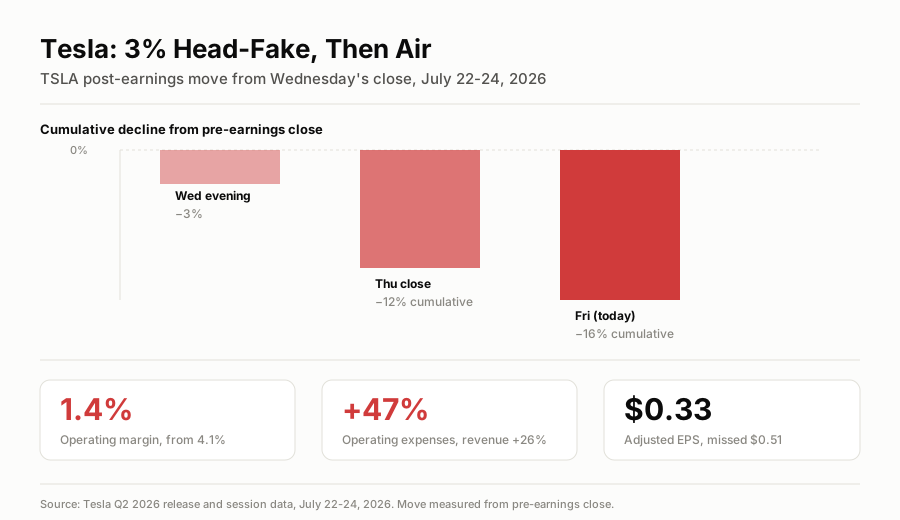
Three percent Wednesday night, then the floor gave way. The margin didn't change; the willingness to ignore it did.
The 48-Hour Fuse
Post-earnings moves are not instant verdicts, they're auctions that take time to clear. Wednesday's after-hours session is thin, headline-driven, and dominated by retail and fast money reacting to the top line: record revenue of $28.2 billion, record deliveries of 480,126, robotaxi talk. On that surface read, down 3% is almost a win.
Then the institutions show up. By Thursday morning the models were rebuilt around the lines that matter: adjusted EPS of $0.33 against the $0.51 the Street wanted, operating income down 57% to $398 million, gross margin slipping to 16.8%. That is not a stock that should trade at a triple-digit multiple, and the desks that fund that multiple started saying so out loud.
The stock fell roughly 9% Thursday and another 4% Friday. The fuse was 48 hours long, but it was always lit.
Where the Downgrades Landed
The Thursday cuts were not about the miss itself, they were about the shape of it. A one-time margin dip from a factory retool is noise. A 47% jump in operating expenses while revenue grows 26% is a company structurally spending faster than it earns, and doing it to fund a bet (autonomy, Optimus, AI compute) that has no proven payoff date.
That reframing is what turned a 3% dip into a collapse. Once the argument shifts from "bad quarter" to "bad math that compounds," the multiple itself is on trial, and Tesla's multiple has the most room to fall of any name in the index. Cut the story premium even modestly and 16% disappears fast.
The Levels That Broke
Technically, this was a clean break, not a wobble. Tesla knifed through both its 50-day and 200-day moving averages inside the week, and the volume on Thursday's gap was among the heaviest of the year. When a crowded momentum name loses those two lines together on a margin catalyst, the buyers who defend those levels tend to step aside, which is exactly the "3%, then air" pattern that played out.
The bull rebuttal is that Tesla has staged violent V-shaped recoveries off exactly this kind of flush before, and it remains the king of chaos precisely because it refuses to trade like a normal stock. True. But a recovery from here needs a fresh autonomy catalyst to override the margin math, and the print didn't deliver one.
The Options Angle
- The volatility crush is your enemy now, not your friend. Buying puts to chase a 16% move that already happened means paying post-earnings premium for a decline the market has largely booked. The easy money on the short side left with the downgrades.
- If you sold premium into the print, this is where discipline pays. A short strangle or condor placed before Wednesday got the vol crush and a move that, while large, may sit inside a wide enough short strike. Manage it, don't marry it: a trending post-earnings tape can still run through a short put.
- The cleaner directional trade is the bounce-or-break, framed with defined risk. If you think the V-recovery comes, a call spread four to six weeks out caps your cost while the story reloads. If you think the margin trajectory keeps grinding, a put spread below the broken 200-day expresses that without paying for a crash that's partly priced.
- Before you touch a day-three TSLA option, ask honestly which side of the trading-or-gambling line you're on. Chasing this tape is usually the gambling side.
The One-Line Read
Tesla's earnings reaction wasn't the 3% you saw Wednesday night, it was the 16% that unfolded once the desks stopped pricing the robotaxi and started pricing the 1.4% margin; the collapse was slow only because the market gave the story two extra days to save itself, and the story didn't show up.
Next up:Fed decision, Tuesday →
More on Earnings
Updated Every Saturday
The Week Ahead
Every earnings date, Fed event and setup for the current trading week, on one page.
Refreshed Weekly
Earnings Calendar
Who reports next, when, and what consensus and the whisper expect.
The Week-Ahead Brief
Don’t miss next week’s setups. Get the Sunday brief.
Latest issue, Oct 11“September CPI, the big banks and TSMC: earnings season starts”
Every Sunday: next week’s earnings dates, Fed days and the trades worth watching, from the same desk that writes the week-ahead hub. Free, built for retail investors.