Why Is Valneva (VALN) Stock Up? A Lyme Vaccine Filing Built on a Trial That Missed
The EMA is now reviewing Pfizer and Valneva's Lyme disease vaccine, and VALN traded up 27% intraday. The Phase 3 behind it missed, with a confidence interval running from 15.8% to 93.5%.
TL;DR
- The European Medicines Agency validated the marketing application for Pfizer and Valneva's Lyme disease vaccine on August 14, starting a formal review. Validation is not approval.
- Valneva's Nasdaq ADR traded $7.20 at 1:34pm ET Friday, up 27.43% from Thursday's $5.65 close. That is an intraday quote, not a close.
- The Phase 3 primary analysis missed. Efficacy was 73.2%, with a 95% confidence interval of 15.8 to 93.5, against a pre-set bar requiring the lower bound above 20.
- A second pre-specified analysis cleared that bar by 1.7 points, at 74.8% with an interval of 21.7 to 93.9. The filing rests on that one.
- Valneva's remaining cash milestones on the programme are $143m against a market value near $659m, plus royalties of 14% to 22% on a product Pfizer controls.
More on Single Stocks: Options Scorecard: A Reddit Put and a Nutanix Pass, Both Right at Expiry →
Why Is Valneva Stock Up Today?
The European Medicines Agency accepted Pfizer and Valneva's marketing authorisation application for their six-valent Lyme disease vaccine and began its formal assessment. Valneva's Nasdaq ADR traded $7.20 at 1:34pm ET on Friday, up 27.43% from Thursday's $5.65 close. The Paris line ended its session near EUR 3.17. The ADR and the ordinary share are different units, so those two prices do not compare directly.
Validation is an administrative step. It means the dossier is complete enough to assess and the agency has started assessing. Nobody has approved anything.
The Board
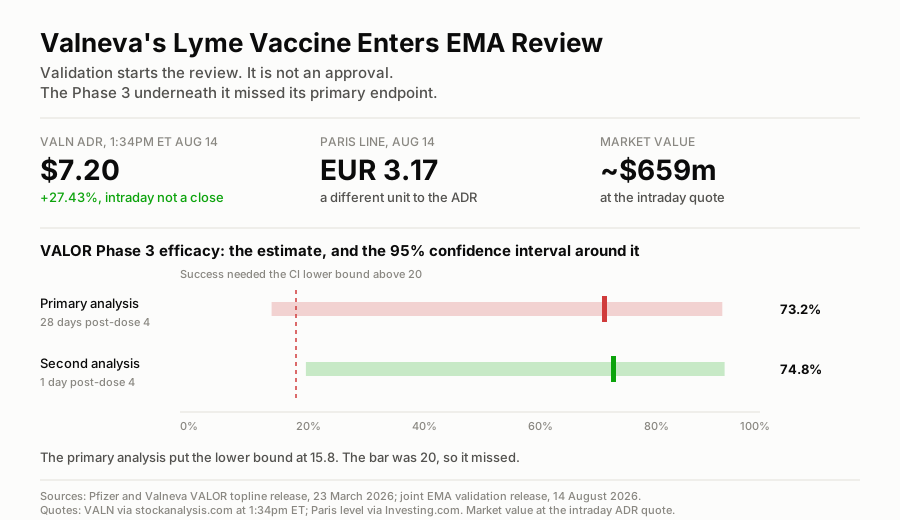
The interval is the part worth reading. Both analyses run from the low twenties to the mid-nineties.
The Confidence Interval Around That 70%
Every write-up of this vaccine quotes efficacy above 70%. Here is what the trial reported on March 23.
VALOR enrolled 9,437 people aged five and over across the US, Canada and Europe on a four-dose schedule. The primary analysis, counting cases from 28 days after dose four, put efficacy at 73.2%, with a 95% confidence interval of 15.8 to 93.5. Success had been defined in advance as an interval whose lower bound sat above 20. At 15.8 it did not, so the primary endpoint was missed. Pfizer's own release says as much.
A second pre-specified analysis, counting from one day after dose four, came in at 74.8%, interval 21.7 to 93.9. That cleared the bar by 1.7 points, and it is the analysis the filing leans on.
I would put the emphasis elsewhere. Both intervals run from the high teens or low twenties up to the mid-nineties. A range that wide means the trial caught too few cases to measure the effect precisely, which is what the companies reported: fewer participants got Lyme disease during the study than the design assumed. The point estimate near 73% is the middle of a very large room, and it is doing more work in the coverage than it can carry.
I don't think the miss is disqualifying. A vaccine can be genuinely effective and still be measured badly by an underpowered trial, and regulators have approved on thinner. But when the difference between pass and fail is which of two counting windows you use, that is worth knowing before you pay 27% more for the shares.
What Valneva Actually Collects
$143 million. That is the early-commercialisation milestone tranche still outstanding under the 2020 Pfizer collaboration, which was structured as $308m of cash in total: $130m upfront, $35m of development milestones, and the $143m contingent on reaching the market. Valneva also earns royalties of 14% to 22% on sales.
Against a market value near $659m at Friday's intraday quote, that milestone tranche alone is worth something over a fifth of the company. Kempen has called the Lyme programme the key to the investment case, and on those numbers I can see why.
Pfizer runs it, though. Valneva does not control the filing, the launch, the price or the marketing budget. A royalty on another company's execution is a thinner asset than a product you sell yourself, and it is worth nothing at all until someone approves the thing.
The Half-Year Underneath the Rally
Valneva reported first-half results on Thursday and the shares fell on them. Revenue was EUR 65.8m against EUR 97.6m a year earlier, down about a third. The net loss widened to EUR 63.3m from EUR 20.8m, slightly more than tripling.
The detail: IXIARO/JESPECT sales fell to EUR 44.0m from EUR 54.7m on a German distributor transition and Department of Defense delivery timing. DUKORAL went to EUR 14.7m from EUR 17.4m. IXCHIQ dropped to EUR 4.4m from EUR 7.5m as the company pulled its chikungunya vaccine back from travel markets toward endemic ones, a retreat that cost EUR 9.7m in manufacturing cancellation fees and a EUR 4.5m inventory write-down.
Cash stood at EUR 121.5m, up from EUR 109.7m at year-end, helped by EUR 37m of gross proceeds from a reserved offering in the second quarter. Management reaffirmed full-year product sales guidance of EUR 135-150m.
Thursday's numbers describe the business Valneva operates now, and it is shrinking. Friday's move is about a product Pfizer might sell in 2027.
What This Changes for American Readers
Very little, yet. Today's step is European. The CDC estimates about 476,000 Americans are diagnosed and treated for Lyme disease each year, with more than 89,000 cases formally reported in 2023, so US demand is not in doubt. A US filing is the open question, and I could not confirm that the FDA submission has been made. Valneva's half-year release says only that regulatory decisions are expected within twelve months and that Pfizer has been engaging with regulators on pathways to licensure. The programme carries FDA Fast Track and EMA PRIME designations.
The precedent is worth knowing. A Lyme vaccine already reached the American market once: GlaxoSmithKline's LYMErix, licensed in 1998 at roughly 78% efficacy after three doses, withdrawn in February 2002. An FDA review found no evidence supporting the arthritis claims made against it. It came off the market because it stopped selling, under sustained negative publicity and a class action. Approval was never the hard part last time.
Biotech binaries move like this in both directions. Replimune ran 127% on a regulatory turn, and Moderna has spent the year showing what happens when vaccine demand disappoints.
The Options Angle
VALN carries a listed US chain. I could not source live premiums for it while writing, so nothing below is quoted against a real price.
That is the smaller problem. The larger one is that this catalyst has no date. "Regulatory decisions expected in the next twelve months" is not something you can buy an expiry against, so every options structure here bets on timing at least as much as outcome, with the timing input a twelve-month shrug from the company. Compare that with Capricor's FDA decision date of August 22, which is a dated event you can actually position around. This one is not, and buying a long-dated option on a $7 ADR to wait out an unscheduled review is how premium decays for a year while the thesis stays alive.
I am passing, and logging it so it gets scored either way.
Trade log
| # | Stance | Structure | Strikes and expiry | Cost or credit | Spot at writing | Implied move | Conviction | Breakeven |
|---|---|---|---|---|---|---|---|---|
| 1 | Pass | Any long option on the Lyme regulatory outcome | No expiry selected; catalyst undated | Live premiums not sourced | $7.20 ADR, intraday 1:34pm ET Aug 14 | Not sourced | 4/10 | n/a |
The One-Line Read
A real regulatory step on a real vaccine, priced as though the trial had gone well. It came in at 73.2% with a floor of 15.8, and Pfizer decides what happens next.
Next up:PCE inflation, Wednesday at 8:30am ET →
More on Single Stocks
Updated Every Saturday
The Week Ahead
Every earnings date, Fed event and setup for the current trading week, on one page.
Refreshed Weekly
Earnings Calendar
Who reports next, when, and what consensus and the whisper expect.
The Week-Ahead Brief
Don’t miss next week’s setups. Get the Sunday brief.
Latest issue, Sep 27“Micron, PCE and the jobs report that decides October”
Every Sunday: next week’s earnings dates, Fed days and the trades worth watching, from the same desk that writes the week-ahead hub. Free, built for retail investors.