87% of Companies Are Beating Earnings and the Market Is Selling. Here's What That Means
Q2 2026 earnings season is running an 87% beat rate, one of the strongest on record, yet the Nasdaq fell 1% on July 16. What history says happens when great earnings stop moving prices, and how to position for it.
TL;DR
- 87% of S&P 500 reporters have beaten estimates this season, against a ten-year norm of roughly 77%. That's one of the strongest starts on record.
- The market's response: Nasdaq -1%, chips -3%, and the single best guide of the season (Broadcom's +200%) got sold.
- When record results stop producing green candles, the message is mechanical: prices already contained better numbers than the companies can print.
- This resolves one of two ways, and history is lopsided about which. The data, the precedent, and the plan below.
More on $SPY: Stock Market Week Ahead (Sep 7-11): Labor Day, Apple's iPhone Event, Oracle, Adobe, and August CPI →
The Paradox in One Picture
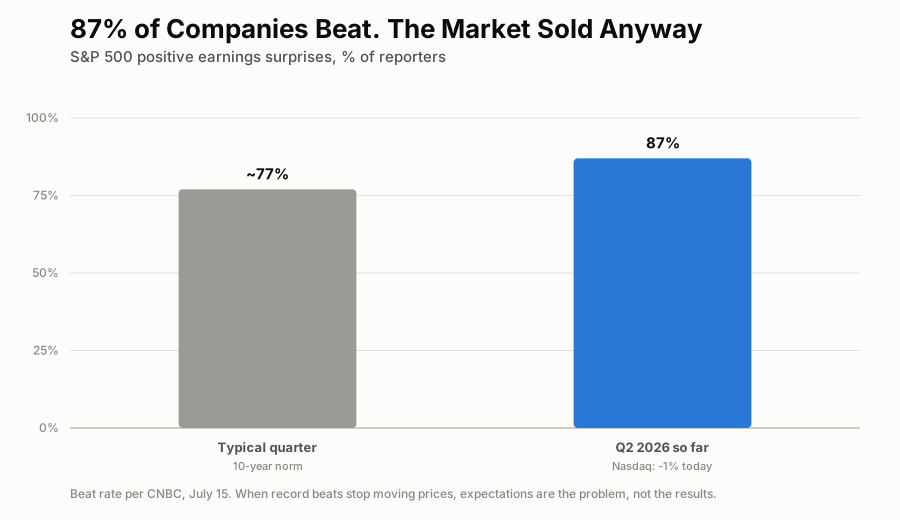
The best beat rate in years, and the market's most-owned sector fell anyway. That combination has a specific meaning.
What the Numbers Actually Say
Take the season's tape at face value: JPMorgan printed a record $16.9 billion. UnitedHealth and Abbott beat. Broadcom guided its AI business up 200%. Netflix and TSMC haven't even reported yet and 87% of everyone who has cleared their bar. Corporate America is having an objectively excellent quarter.
Now look at what those results bought: banks rallied, healthcare ripped, and the AI complex, the sector carrying the highest expectations, fell on its best news. The beats are being paid in exact inverse proportion to how crowded the sector is. That's not a market rejecting earnings. It's a market repricing expectations, sector by sector, using earnings season as the trigger.
What History Says Happens Next
High-beat-rate seasons that meet flat-to-down prices have a consistent historical signature, and it's more benign than the doom headlines suggest:
- They mark expectation peaks, not earnings peaks. The companies keep growing; the multiple paid for the growth compresses for a few months while positioning resets. Think consolidation, not crash.
- They rotate rather than break. The excess expectation premium drains from the crowded sectors and refills the cheap ones, exactly what today's flipped heatmap showed in real time. Index-level damage stays modest because the sectors offset.
- The exception, the one that turns ugly, is when the beats themselves start shrinking two or three quarters later. Expectations resets are survivable; earnings deceleration on top of one is 2000. The early-warning line for that scenario runs through the labor data, not through this season's prints.
So the forward-looking read from the data: earnings say the economy and the AI buildout are fine; prices say the ownership of those facts got too concentrated. The gap closes through time and rotation, and the index grinds while its insides violently reshuffle. That's been the last three sessions exactly.
The Options Angle
- Sell index vol, own sector spreads. An index pinned by offsetting rotations is an iron condor's favorite weather. SPY 30-to-45-day condors around the current range monetize the churn, while the real directional money goes into the XLV-over-XLK spread.
- Fade earnings-day reactions in crowded names, both directions. The whisper economy is mispricing single-print moves (Broadcom -3% on tripling). Post-earnings drift trades (selling the overreaction 2-3 days later) have the edge while this regime lasts.
- Keep a list of what you want to own when the reset finishes. The 87% beat rate is the shopping catalog: the businesses are outperforming while their stocks mark time. When the expectation bar finishes falling to meet the earnings line, the names with the widest gap (AVGO, TSMC on a confirmed print) re-rate first.
The One-Line Read
Companies are printing one of the best seasons in a decade and the market is using it to take profits. Expectations peaked, not earnings. That resolves through rotation and time, both already underway, and the disciplined move is to buy the earnings line while everyone else mourns the expectations line.
Next up:PPI, tomorrow at 8:30am ET →
More on $SPY
$SPY · 2026-09-05
Stock Market Week Ahead (Sep 7-11): Labor Day, Apple's iPhone Event, Oracle, Adobe, and August CPI
$SPY · 2026-09-04
Options Scorecard: The Week of August 24, Graded (4 Calls, 75% Right)
$SPY · 2026-08-29
Stock Market Week Ahead (Aug 31-Sep 4): Broadcom, Dell, and a Jobs Report Into 57% Hike Odds
Updated Every Saturday
The Week Ahead
Every earnings date, Fed event and setup for the current trading week, on one page.
Refreshed Weekly
Earnings Calendar
Who reports next, when, and what consensus and the whisper expect.
The Week-Ahead Brief
Don’t miss next week’s setups. Get the Sunday brief.
Latest issue, Sep 7“Week ahead in the stock market...”
Every Sunday: next week’s earnings dates, Fed days and the trades worth watching, from the same desk that writes the week-ahead hub. Free, built for retail investors.