Why AI Stocks Dumped Today: Three Hammers, One Session
Arm fell 8%, Micron 8%, AMD 5% and the chip ETF 3% on July 16. The three simultaneous triggers behind the AI selloff, whether the trade rebounds, and what the earnings data actually says about what comes next.
TL;DR
- The damage: Arm -8%, Micron -8%, SK Hynix ADR -8%, AMD -5%, Broadcom -3%, SMH -3.2%. The Nasdaq lost 1% while most of the market was fine.
- Three triggers landed in one session: CXMT's $8.5 billion IPO (a supply threat to memory), Huang's $100B-per-gigawatt cost math (a margin threat to compute), and Broadcom selling off on a +200% AI guide (a positioning tell on everything).
- This is different from last week's flush. That was flows. Today was the first real fundamental challenge of the summer.
- The rebound question has a scheduled answer: TSMC reports Thursday, and it arbitrates all three stories at once.
More on $SMH: Is the AI Chip Trade Back? MU, SNDK and the Memory Names Ripped Again Today. V-Shape or Bull Trap? →
The Damage
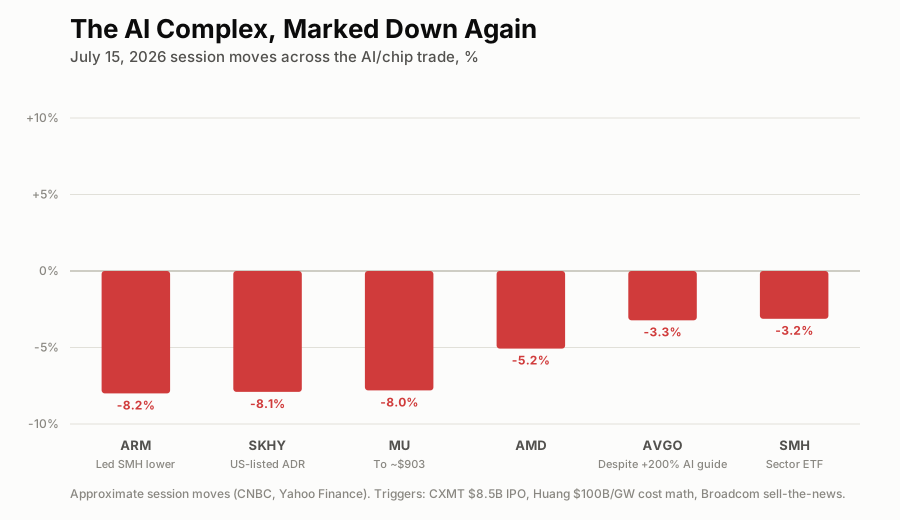
Every leg of the AI trade, red at once: memory, compute, networking, and the ETF that wraps them.
Hammer One: China Crashed the Supply Party
The entire memory leg of the AI trade rests on one premise: demand is infinite and supply is fixed until 2028. Today China disputed the second half. CXMT, the state-backed DRAM champion, announced an $8.5 billion IPO to scale production, and the resume it filed with that announcement is genuinely scary: world's fourth-largest DRAM producer, revenue up sevenfold in six months, and Apple already testing its chips for China-market devices.
New supply is the one thing a shortage-priced sector cannot forgive. Micron wears this hardest, and the MU breakdown covers the level it just broke. But every memory-adjacent name repriced on the same logic: if the shortage ends a year early, the multiple is wrong everywhere.
Hammer Two: Jensen's Cost Curve
Huang told the world AI computing costs are heading from roughly $50 billion toward $100 billion per gigawatt, and Seaport connected the dots the bulls didn't want connected: at those costs, customers can't pay, so Nvidia increasingly has to help them pay. Vendor financing to keep your own demand alive is one of the oldest late-cycle signatures in tech, and the market's memory of it (Lucent, Nortel, the dot-com telco buildout) is why a single supply-chain comment can knock a percent off the Nasdaq. The full gigawatt piece runs the math.
Hammer Three: The Positioning Tell
Broadcom guided AI semiconductor revenue up 200% year over year to $16 billion. The stock fell 3% and dragged the sector with it. Read that twice, because it's the most important sentence of the day: a tripling of AI revenue is now a disappointment. When no achievable number clears the bar, the problem is the bar. The sell-the-news autopsy goes deeper, but the conclusion is simple: positioning in the AI trade got so crowded that good news stopped working, and when good news stops working, prices fall until expectations reset.
So Does It Rebound?
Split the answer, because the data splits it.
The demand data says yes. 87% of S&P reporters are beating estimates. Broadcom's actual AI number was $16 billion and tripling. NAND contract pricing is still up 70-75% quarter over quarter. TSMC's revenue trajectory (reported Thursday) has shown zero deceleration through every prior scare. Demand has never been the problem in any 2026 selloff, and it isn't today.
The pricing data says not to the old highs, not quickly. CXMT is real incremental supply with state backing, and Huang's cost curve is a real margin question. Neither kills the trade; both compress the multiple you should pay for it. The rational path from here is a rebound to lower highs while the market re-underwrites what "priced for perfection" should cost when perfection now includes a Chinese competitor and $100B gigawatts.
The Options Angle
- Thursday is the whole trade. Position around TSMC, not around today. A beat-and-raise from the foundry that builds everyone's chips is the highest-quality "all clear" available; buy two-month SMH or MU calls on that confirmation and skip the overnight gamble.
- If you're long the complex and staying long, collar it through Thursday. Sell a call above, buy a put below, roughly zero cost at today's IV. You keep the position through the print without wearing the full tail.
- The bear expression with edge is memory-specific, not sector-wide. CXMT threatens commodity DRAM, not HBM and not logic. If you want to short something on today's news, MU put spreads target the actual thesis damage; shorting SMH shorts a lot of businesses China didn't touch today.
The One-Line Read
The AI trade fell because three different cracks (new supply, rising costs, exhausted positioning) appeared in one session, and for the first time this summer the selling had fundamentals attached. Demand is still spectacular, which is why this reprices rather than dies, and TSMC on Thursday tells you which of those two words the market picks.
Next up:PPI, tomorrow at 8:30am ET →
More on $SMH
Updated Every Saturday
The Week Ahead
Every earnings date, Fed event and setup for the current trading week, on one page.
Refreshed Weekly
Earnings Calendar
Who reports next, when, and what consensus and the whisper expect.
The Week-Ahead Brief
Don’t miss next week’s setups. Get the Sunday brief.
Latest issue, Sep 7“Week ahead in the stock market...”
Every Sunday: next week’s earnings dates, Fed days and the trades worth watching, from the same desk that writes the week-ahead hub. Free, built for retail investors.