Consumer Sentiment Fell to 51.0 in August. Inflation Expectations Went Up
Preliminary August consumer sentiment fell to 51.0 from 55.2, against a 54.5 consensus, while one-year inflation expectations rose to 4.3%. What that mix does to the September hike case.
TL;DR
- Preliminary August sentiment came in at 51.0, against a consensus near 54.5 and July's final of 55.2. That is -7.6% on the month and -12.4% on the year.
- The expectations half did the damage. Expectations fell 8.7% to 50.6. Current conditions fell 5.5% to 51.8.
- One-year inflation expectations rose to 4.3% from 4.2%. The long-run measure held at 3.3% for a third straight month.
- 51.0 is not a 2026 low. April printed 49.8 and May 44.8. August gave back most of a two-month recovery rather than breaking new ground.
- My read: a Fed carrying three hike dissents cares more about the 4.3% than about the 51.0.
More on $SPY: Stock Market Week Ahead (Sep 28-Oct 2): Micron Earnings, PCE Inflation, and the Jobs Report That Decides an October Fed Hike →
What Was the August Consumer Sentiment Number?
The University of Michigan's preliminary August Index of Consumer Sentiment came in at 51.0, down from July's final of 55.2 and below a consensus sitting in the mid-54s. Current conditions printed 51.8 and expectations 50.6, per the university's own release.
The percentage moves reconcile against the levels. 51.0 against 55.2 is -7.6%, and against last August's 58.2 it is -12.4%. Current conditions on 54.8 is -5.5%, and on the year-ago 61.7 it is -16.0%.
The Board
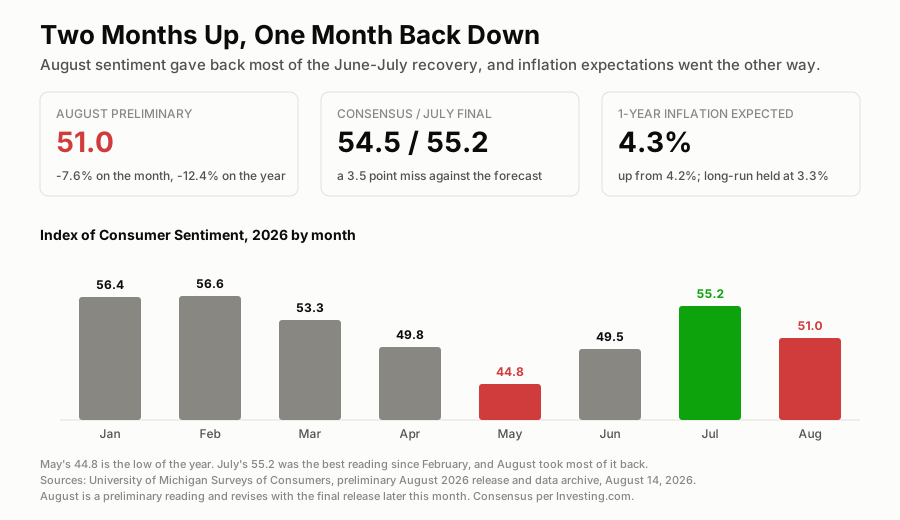
July was the best reading since February. August handed most of it back.
Where 51.0 Actually Sits
Below the year so far, and above the worst of it. The 2026 series runs 56.4 in January, 56.6 in February, 53.3 in March, 49.8 in April, 44.8 in May, 49.5 in June, then 55.2 in July. May is the low. July was the strongest month since February, and it is the number August is measured against.
So this is a giveback, not a fresh collapse. That distinction is worth holding onto, because a 7.6% monthly drop reads like a cliff edge until you notice the index spent April, May and June below where it just landed. Households have been miserable in this survey all year. What changed in August is that the two months of improvement stopped.
Expectations Fell Harder Than Conditions
The split inside the index is where I would spend the attention. Current conditions, which asks people about their situation now, fell 5.5%. Expectations, which asks about the year ahead, fell 8.7%. Survey director Joanne Hsu attributed it to a deterioration in expected business conditions, with the short-run measure down about 11% and the long-run measure down about 17%.
One line from the release does more work than the index does. Only 8% of consumers expect their income to grow faster than inflation over the next year, against 18% in December 2024. That is a survey of people who have concluded they are going to lose ground, and it showed up across income brackets, age groups and party lines.
The 4.3% That Complicates a Hike
Sentiment falling is a growth signal. Inflation expectations rising at the same time is the part that constrains the response. One-year expectations went to 4.3% from 4.2%, and this Fed has said repeatedly that the expectations series matters more to it than the mood index does.
Odds of a September hike sit near 33% on the CME FedWatch tool, down from close to 50% a week ago, per CNBC's reporting on the run of soft data. Today's release pushes both ways at once: the growth half argues against a hike, the expectations half argues for one. I do not think 0.1 percentage point on a survey measure moves a committee, but it does mean the doves cannot claim this print cleanly, and the hike-watch case survives the week intact. Kevin Warsh gets to arbitrate it in public at Jackson Hole on August 28.
Retail Sales Said Something Similar Four Hours Earlier
July advance retail sales fell 0.6% at 8:30am against a consensus running from +0.1% to +0.3%, and the control group that feeds GDP fell about 0.5%. The full breakdown is in the retail sales hub, including the reason I am not ready to call it a spending strike: nonstore retailers more than account for the control-group miss, and that line is still growing 7.7% a year.
The tape has been unbothered. SPY was at $777.01, down 0.11%, at 11:01am ET against Thursday's $777.88 close, per stockanalysis.com. That is an intraday quote taken from a market that closed at a record on Thursday, and the session still has five hours to run. Whether the consumer is actually cracking gets a much better test next week, when Home Depot, Target, Lowe's and Walmart report into retail earnings week and have to describe the same July these two releases just measured.
The One-Line Read
Sentiment fell 7.6% and inflation expectations rose anyway. That is the uncomfortable combination for a Fed with hike dissents on the record, and it is why 51.0 does not settle September.
Next up:PCE inflation, Wednesday at 8:30am ET →
More on $SPY
$SPY · 2026-09-27
Stock Market Week Ahead (Sep 28-Oct 2): Micron Earnings, PCE Inflation, and the Jobs Report That Decides an October Fed Hike
$SPY · 2026-09-19
Stock Market Week Ahead (Sep 21-25): Costco, AutoZone, KB Home and a 5% Ten-Year
$SPY · 2026-09-18
Options Scorecard: A Reddit Put and a Nutanix Pass, Both Right at Expiry
Updated Every Saturday
The Week Ahead
Every earnings date, Fed event and setup for the current trading week, on one page.
Refreshed Weekly
Earnings Calendar
Who reports next, when, and what consensus and the whisper expect.
The Week-Ahead Brief
Don’t miss next week’s setups. Get the Sunday brief.
Latest issue, Sep 27“Micron, PCE and the jobs report that decides October”
Every Sunday: next week’s earnings dates, Fed days and the trades worth watching, from the same desk that writes the week-ahead hub. Free, built for retail investors.