KOSPI and SK Hynix After the Crash: Buy the Dip, Buy Puts, Sell Cash-Secured Puts, or Wait?
SKHY has broken below its $149 IPO price to around $139 after Korea's worst-ever session for SK Hynix. Four ways to play it, scored honestly, and the one we'd actually take.
TL;DR
- SK Hynix's ADRs have broken below the $149 IPO price, trading as low as $139.01, after the Seoul shares posted their worst single day on record.
- Korea took the whole market down with it: the KOSPI fell 8.95% into a circuit breaker, Samsung fell double digits, and foreign and institutional investors dumped 2.8 trillion won.
- Four choices are on the table: buy the dip, buy puts, sell cash-secured puts, or wait. Three of them are worse than they look right now.
- Our answer: wait for the earnings print, then sell puts. The reasoning, and what would change it, below.
Is Now the Time to Buy SK Hynix?
The short answer: not yet, and the reason is that the one fact capable of settling the argument arrives on a schedule. SKHY is cheap relative to three weeks ago and expensive relative to a world where China's DRAM buildout works. Nothing about the price tells you which world you're in. Earnings do. Buying before the print is paying for an answer you could get for free by waiting a few days.
That's not indecision. It's refusing to pay for information that's about to be published.
The Board
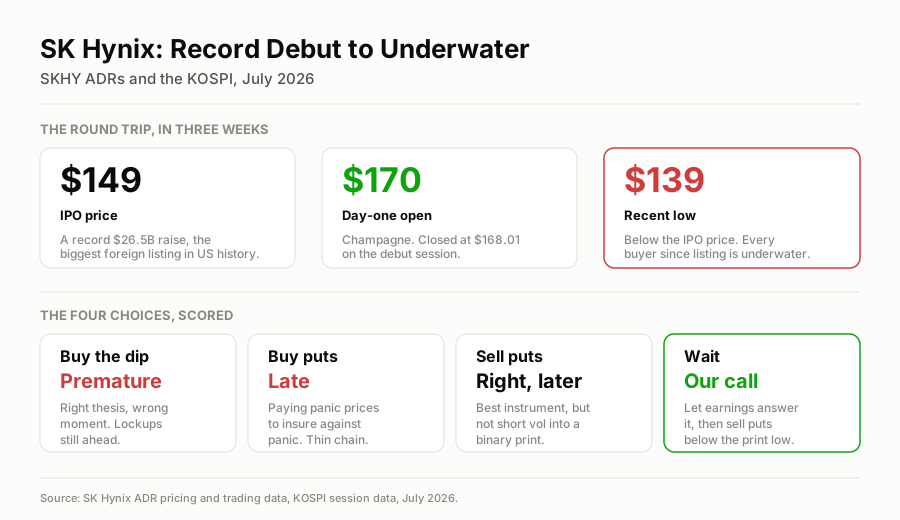
From a $26.5 billion record debut to below the IPO price in under three weeks. Everyone who bought the open is underwater.
How Bad the Damage Actually Is
Get the scale right before choosing a strategy.
SK Hynix priced the largest foreign listing in US history at $149, raised more than $26 billion, and opened at $170. Within days, Seoul shares fell 15.4%, the worst session in company history, dragging the KOSPI down 8.95% into a market-wide halt. The ADRs have since traded as low as $139.01, meaning every single buyer since the listing is underwater, including the institutions that took the IPO allocation.
The proximate causes stack: profit-taking after Seoul shares more than tripled this year, a brokerage cutting Q2 operating profit estimates to 60.4 trillion won against 65 trillion consensus, the CXMT supply threat, and a global risk-off tape.
Option 1: Buy the Dip
The case. SKHY makes the HBM that feeds AI servers, and HBM is sold out into 2027. CXMT threatens commodity DRAM, not high-bandwidth memory, and nobody credible puts Chinese HBM4 at scale inside two years. If that holds, you're buying the best-positioned memory asset on earth roughly 18% below where institutions bought it three weeks ago.
The problem. A stock that just printed its worst day ever is not making a considered statement about value, it's in a liquidation. Newly listed shares have no support levels because there's no trading history to build them from, and there is lockup expiry risk ahead as early investors become able to sell. Buying into forced selling with more forced selling scheduled is how you catch the falling knife with both hands.
Verdict: premature. Right thesis, wrong moment.
Option 2: Buy Puts
The case. If Q2 operating profit really does come in near 60.4 trillion won against 65 expected, and CXMT's IPO keeps compressing the sector's multiple, there's more downside. Puts express that with defined risk.
The problem. You are arriving late to your own idea. Implied volatility on memory names is elevated because the crash already happened, so you're paying panic prices to insure against panic. Worse, SKHY's options chain is young, thin and wide, which makes every entry and exit expensive. Buying protection after a 15% down day is buying umbrellas in a downpour.
Verdict: expensive and late. The time to own puts was three weeks ago at $170.
Option 3: Sell Cash-Secured Puts
The case. This is the strategy that fits the situation best, because it monetizes exactly what's abundant: fear. Selling a put below the current price pays you elevated premium and sets a purchase price beneath a level that already absorbed heavy capitulation. If SKHY recovers, you keep the cash. If it falls to your strike, you buy the HBM franchise at a discount to a discount, which is the wheel strategy's entire logic.
The problem. Selling puts means you are structurally bullish with a cushion, not neutral. Do it before earnings and you're short volatility into a binary event with a live estimate cut circulating. The thin chain also means the premium may not compensate you properly for the risk.
Verdict: the right instrument, at the wrong time. Which points at the answer.
Option 4: Wait
The case. Earnings are the falsification test we set for this whole thesis. One print resolves the estimate-cut question, the HBM pricing question, and management's read on CXMT. Waiting costs you nothing except the possibility of a bounce you didn't need to catch.
The problem. You will not buy the low. Accept that. Nobody trading a chart in real time does, and building a strategy around catching it is how people end up buying every level on the way down.
Verdict: correct, and boring, which is usually the same thing.
What We'd Actually Do
Wait for the print, then sell cash-secured puts. That sequence gets you paid for patience instead of paying for impatience, and it converts a binary event from a risk into an information source.
Concretely:
- Before earnings: nothing. No shares, no puts bought, no puts sold. The event is unpriceable at a sensible risk-reward with a live estimate cut in the market.
- If the print is survivable (HBM pricing intact, no fresh CXMT capitulation from management), sell puts below the post-print low. You collect volatility that's still elevated after the event, with the binary risk removed.
- If the print is genuinely bad, the thesis changes and you don't need a position at all. That's the outcome waiting protects you from.
- Size for a new listing. No trading history, lockup expiries pending, and a thin options chain all argue for a smaller position than your conviction suggests.
The One-Line Read
SK Hynix has fallen from a record $26.5 billion debut to below its $149 IPO price in under three weeks, which makes the HBM franchise genuinely cheaper and the tape genuinely broken at the same time; buying now is early, buying puts is late and expensive, and selling puts is right but not before an earnings print that answers the only question that matters, so wait a few days, let the report do the work, then get paid to buy it lower.
More on Markets Today
$SPY · 2026-07-27
Stock Market Today, July 27, 2026: Dow Climbs 262 Points on Cheap Oil While Nvidia's 5% Drop Sinks the Nasdaq
$SPY · 2026-07-27
SPY Is Only 3% Off Its Record. So Why Does It Feel Like a Bear Market?
$SPY · 2026-07-27
Stock Market Today, July 27: Stocks Opened Green and Gave It Back. The Sell-Off Was Underneath.
The Sunday Setup
Enjoyed this breakdown? Don’t miss the next market setup.
Get deep-dive analyses delivered to your inbox every Sunday. Free, and built for retail investors.
Comments
0 totalNo comments yet. Be the first to drop a take.