Mag 7 Slides, Memory Rips: The AI Trade Splits in Two
Six of the Magnificent Seven fell while Micron, SanDisk and SK Hynix rose 7% and CoreWeave jumped 19%. What split the AI trade in two on August 12.
TL;DR
- As of a 1:20pm ET snapshot, six of the Magnificent Seven are red: Meta -2.9%, Microsoft -2.0%, Tesla -1.9%, Amazon -1.2%, Apple -0.9%, Alphabet -0.2%. The exception is Nvidia, up 2.9%: the one member of the seven that gets paid for the buildout instead of paying for it.
- Across the aisle, memory and AI infrastructure ripped: SanDisk +7.7%, SK Hynix +7.3%, Seagate +7.0%, Micron +6.8%, Western Digital +4.0%, and the SOX semiconductor index +3.1%. Post-earnings, Nebius +27%, CoreWeave +19%, Super Micro +18%.
- The index hides all of it. The S&P 500 sits at 7,750, up 0.3% and within 0.1% of its record close, because the components' gains and the platforms' losses nearly cancel.
- Fresh fuel for memory today, all via one report: Temasek planning direct stakes in Samsung and SK Hynix, Micron's business chief calling 2027 supply "even tighter" than 2026, and Intel's CEO noting memory makers are reportedly sold out for the next two years.
- This is rotation inside the AI trade, and this morning's in-line CPI print cleared the macro objection to doing it at a record high.
More on $MU: Is Micron a Buy Under $900? The CXMT Fear Is Now 30% of the Price →
Why Are Memory Stocks Up While the Mag 7 Falls?
Money is moving from the companies paying for the AI buildout to the companies being paid for it. Last night's results gave it three fresh reasons: CoreWeave beat and raised capital spending guidance to $35-39 billion, Super Micro guided fiscal 2027 revenue to $65-72 billion against a street at $52.5 billion, and Nebius reported $3 billion of ARR, up from $1.9 billion at the end of March. Today's memory headlines, Temasek's planned stakes and "sold out for two years" commentary, extended the move to anything that stores a bit.
There is no equivalent headline on the other side. I could not find a company-specific story behind Meta's or Microsoft's decline today. My read on that absence: nothing broke at the platforms, they are simply where the money for the memory bid is coming from.
The Board
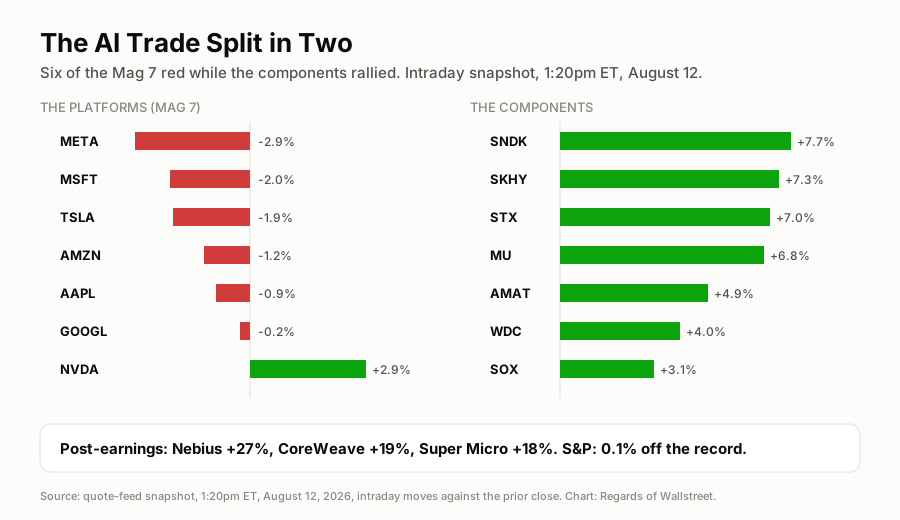
Same trade, two sides of the invoice. Every number is an intraday snapshot, not a close.
What Moved, Exactly
All figures are a 1:20pm ET quote-feed snapshot against Tuesday's close, so treat them as a photograph of mid-afternoon, not the day's verdict.
The platforms: Meta -2.9% to $582, Microsoft -2.0% to $494, Tesla -1.9% to $326, Amazon -1.2% to $269, Apple -0.9% to $302. Alphabet, already down 9.5% from its August 5 level after the DeepMind shakeup and everything that followed it, was near flat at $343. The equal-weight Mag 7 ETF was off about 1%.
The components: SanDisk +7.7% to $1,368, SK Hynix +7.3% to $152, Seagate +7.0% to $878, Micron +6.8% to $927, Western Digital +4.0%, Applied Materials +4.9% the day before its own earnings, Lam Research +5.5%, Intel +4.5%. The SOX rose 3.1%.
And the one company on both sides of the ledger: Nvidia, +2.9%. It is a Magnificent Seven member trading like a component maker, because that is what it is. On a day the market is voting on who captures the AI dollar, Nvidia getting bought while its six index-mates get sold is as clean a statement of the thesis as the tape can print.
The year-to-date picture says this has been running for months: our own computed figures against the year's first close put the SOX up 69%, Micron up 194% and SanDisk up roughly 400%, while the equal-weight Mag 7 ETF is up about 3.7%. Today is an old trade getting louder.
The Same Dollar, Two Ledgers
The mechanism is right there in the filings this site has been covering all summer. Alphabet guided 2026 capital expenditure to $195-205 billion, watched free cash flow go negative, and raised $25 billion of debt on August 10. Meta has expanded its CoreWeave commitments to roughly $35 billion, which is a chunk of the $129.2 billion backlog CoreWeave put up on last night's call. Super Micro's $65-72 billion guide is hyperscaler purchase orders. Micron's 194% year is those same budgets landing as revenue in a market where supply cannot respond.
So one dollar of hyperscaler capex shows up twice: as a cost on a platform's ledger, compressing the free cash flow story that justified its multiple, and as revenue on a component maker's ledger, at shortage pricing. For two years the market bought both sides. Today it picked one.
The Part I'd Be Careful With
Morgan Stanley Wealth Management's Lisa Shalett called the semiconductor rally "meaningfully overbought" this week, and the trailing P/E ratios being passed around as reassurance, high-teens to low-20s for the memory names, are the kind of cheap that memory investors have learned to distrust. A memory company always looks cheapest on trailing earnings at the top of the cycle, because the E is a shortage price that no one contracts to pay forever. The bull answer is Sadana's: if 2027 is genuinely tighter than 2026, the E keeps growing into the multiple. Today the market paid up for the Sadana side of that argument.
On the other side, six stocks drifting 1-3% lower is a rotation. The Mag 7 ETF is still up on the year and the S&P is testing a record during the sell-down, so the money is just changing seats. The version of this that should actually worry a platform holder is the one where the capex keeps rising and the monetisation questions, the kind Alphabet has spent a week answering badly, start attaching to the others. That did not happen today. Nothing in this tape says the platforms broke. The marginal buyer found a faster horse. Watch the sector heatmap into the close to see whether the split survives the last hour.
The Options Angle
- I am not chasing memory up 7% intraday. The names have a fresh catalyst stack, but entries matter: SanDisk has already shown this year it can give back a move this size in a session, and the next scheduled test of the whole complex is Applied Materials tomorrow night.
- I am also not writing covered calls against this strength, which was July's signature mistake across the complex. Realised moves have beaten implied all season in memory; renting out upside in a confirmed shortage is picking up nickels in front of the same steamroller.
- The AMAT print is the near-term referee. The preview logged no volatility plays because no current implied move was sourceable; nothing about today changes that, except that a 5% pre-earnings rally raises the bar for the guide.
Trade log
| # | Stance | Structure | Strikes and expiry | Cost or credit | Spot at writing | Implied move | Breakeven |
|---|---|---|---|---|---|---|---|
| 1 | Pass | Chasing with short-dated long calls on MU/SNDK | At the money, this week | Live chain not sourced | MU $927.37, SNDK $1,368.25, 1:18pm ET Aug 12 | Not sourced | Needs the +7% intraday move to extend before theta wins |
| 2 | Pass | Covered calls against memory positions into the rally | Near the money, front month | Live chain not sourced | MU $927.37, 1:18pm ET Aug 12 | Not sourced | Fails if the shortage produces another outsized leg, which is exactly what realised-vs-implied has done all season |
Both rows get scored like every other logged call: row 1 against whether the intraday buyers were right by Friday's close, row 2 against whether capped upside in memory cost more than the premium collected through expiry.
The One-Line Read
The S&P 500 spent Wednesday within a tenth of a percent of its record while six of the seven stocks that built the last two years of records got sold, and the money went straight into the memory and infrastructure names on the other side of the same AI invoice: the market is no longer paying for the promise to spend, it is paying the companies the spending is promised to.
Next up:MU reports Wednesday after the close →
More on $MU
Updated Every Saturday
The Week Ahead
Every earnings date, Fed event and setup for the current trading week, on one page.
Refreshed Weekly
Earnings Calendar
Who reports next, when, and what consensus and the whisper expect.
The Week-Ahead Brief
Don’t miss next week’s setups. Get the Sunday brief.
Latest issue, Sep 20“The week after the hike: two housing reads and Costco earnings...”
Every Sunday: next week’s earnings dates, Fed days and the trades worth watching, from the same desk that writes the week-ahead hub. Free, built for retail investors.