Why Is Oatly (OTLY) Stock Up Over 30%? The Q2 2026 Guidance Raise, Explained
Oatly stock surged as much as 33% on July 22 after Q2 2026 revenue of $240.1M beat estimates, adjusted EBITDA turned positive, and Oatly doubled its 2026 growth guidance to 8-10%. The plays to make.
TL;DR
- Oatly popped as much as 33% intraday on July 22 after Q2 2026 earnings: revenue of $240.1 million (up 15.2%) crushed the $219.5 million estimate, and the company posted its first positive adjusted EBITDA in this cycle.
- The real catalyst was the guidance: management roughly doubled its full-year constant-currency revenue growth outlook to +8% to +10%, up from +3% to +5%.
- The asterisk nobody's putting on the chart: Oatly left its full-year adjusted EBITDA guide unchanged at $25M-$35M. More sales, same profit target. That's a tell.
- This is a real operational beat on a ~$10 stock that trades like a firecracker. Respect the move; don't buy day-two calls into a volatility spike.
More on Earnings: Options Scorecard: The Week of August 17, Graded (25 Calls, 72% Right) →
Why Is Oatly Stock Up Over 30% Today?
Oatly's Q2 2026 report beat on revenue, flipped adjusted EBITDA positive for the first time in this recovery, and, most importantly, management doubled its 2026 revenue-growth guidance. On a beaten-down small-cap that had opened the day near $9.88, that combination was enough to send shares up as much as 33% in a single session.
Wall Street went in expecting a mess. Consensus called for a ($0.99) per-share loss and $219.5 million in revenue. Oatly delivered $240.1 million, an outright beat, and paired it with an outlook raise instead of the usual oat-milk excuses. When expectations are on the floor, clearing them by that much is how a stock moves 30% before lunch.
The Board
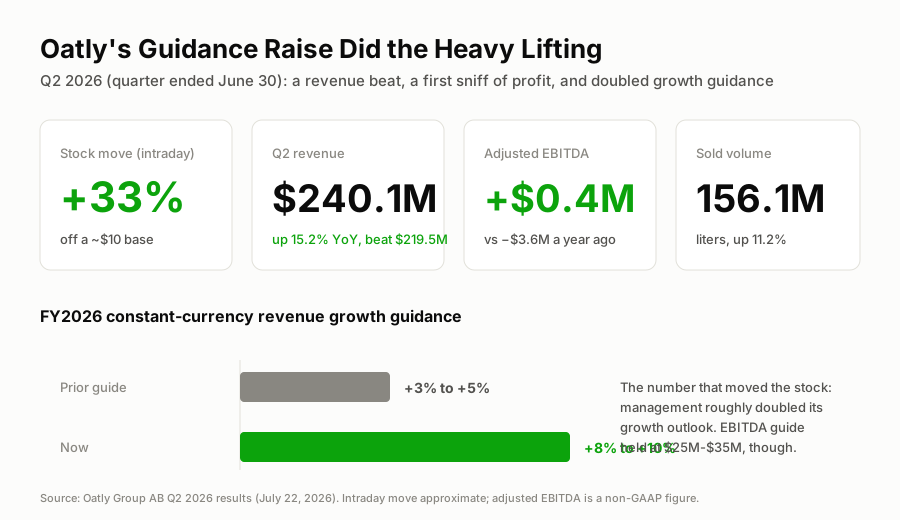
The revenue beat got the pop started. The guidance raise is what kept it going.
What Oatly Actually Reported
Revenue of $240.1 million, up 15.2% from $208.4 million a year ago. Strip out a $5.2 million currency tailwind and constant-currency growth was still 12.7%, so this wasn't a foreign-exchange mirage: the underlying business genuinely accelerated.
Volume backs it up. Oatly sold 156.1 million liters of the stuff, up 11.2% from 140.4 million. That matters more than the dollar figure, because volume growth means people are actually buying more oat milk, not just paying higher prices. Europe & International accelerated, North America accelerated (led by the retail channel), and even Greater China posted volume growth despite tougher foodservice competition.
Then the profit line. Adjusted EBITDA came in at positive $0.4 million, a $4.0 million swing from the −$3.6 million loss a year earlier. It's a rounding error in absolute terms, but the sign flipped, and for a company that has spent years bleeding cash, "barely positive" reads as a milestone. This follows a Q1 in which Oatly beat on the bottom line too, posting a ($0.38) loss against an expected ($0.90).
The Number That Actually Moved the Stock
A revenue beat gets you a pop. A guidance raise gets you a 30% day.
Oatly took its full-year constant-currency revenue growth guidance from +3% to +5% all the way up to +8% to +10%. Roughly doubling your growth outlook halfway through the year is the loudest signal a management team can send that the back half is tracking ahead of plan. Markets pay for the second derivative: not just growth, but growth that's speeding up. Two consecutive quarters of "accelerating" in the release did the rest.
That's the bull case in one line: an oat-milk brand that markets had left for dead is growing double digits again and just told you it expects that to continue.
The Asterisk on the Chart
Now the part that isn't in the celebratory headlines. Oatly raised its revenue guidance and left its full-year adjusted EBITDA guidance sitting exactly where it was: $25 million to $35 million, unchanged.
Read that back. The company expects to sell meaningfully more product this year than it did a quarter ago, and it expects the same amount of profit to fall out the bottom. That means the incremental revenue is coming at thin margins, or it's spending the upside back into promotion and shipping to win that volume. Either way, the profit engine didn't get more powerful; the top line did. On a stock that just repriced 30% higher on the growth story, that's the detail the next earnings call will be graded on.
Two more things worth keeping honest about. The headline 15.2% growth was flattered by that $5.2 million FX tailwind, so the true operating number is the 12.7% constant-currency figure. And this is still a company posting GAAP net losses with a trailing net margin around −17%: "adjusted EBITDA positive" is a real step, but it is not the same as "profitable."
The Small-Cap Reality Check
OTLY is a ~$10 stock with a 52-week range of $8.01 to $18.84. Names like this don't move 30% because the world revalued a blue chip; they move 30% because a heavily shorted, low-priced, low-float-feeling ticker got a genuine catalyst and everyone hit the buy button at once. The same mechanics that produce a +33% candle produce the −20% ones. This is the beat-and-rip cousin of the dynamic we covered in the earnings beat paradox, where a strong print is necessary but not sufficient for the stock to hold the gains.
It's a better setup than a pure momentum name. Oatly has actual accelerating revenue and a guidance raise behind it, more like GM's guidance-raise pop than AMC's record-quarter meme rip. But the volatility profile is identical, and the profit guide that didn't budge means the story can crack on the very next update if margins disappoint.
The Options Angle
- Don't chase the +33% candle with calls. Post-earnings implied volatility on a small-cap that just did this is jammed sky-high. You can be dead right on direction and still lose money to volatility crush as the options bleed premium over the next few sessions. That's the first lesson of options trading, and low-priced movers teach it the hard way.
- The cleaner bullish structure is selling cash-secured puts below the gap. Elevated IV pays you a fat premium to agree to buy a now-accelerating Oatly at a lower price. Worst case, you own the shares cheaper than today; best case, you keep the premium.
- If you're long from single digits, take the gift in pieces. Trim into strength, keep a runner with a stop under the pre-earnings level, and let the guidance-raise thesis prove itself over the next quarter rather than betting the whole position on it.
- If you already own it and just want income, a covered call against the spike lets you sell that inflated volatility while capping a stock that may need to digest the move anyway.
- Be honest about which side of the trading-or-gambling line a day-two OTLY option sits on. On a $10 ticker moving 30%, that line is thin.
The One-Line Read
Oatly earned this pop the hard way, with accelerating volume, a real revenue beat, and its first positive adjusted EBITDA, then supercharged it by doubling its growth guidance; but the profit target that didn't move is the reason to trade this with defined risk and a healthy respect for the −20% day that lives on the other side of every +33% one.
Next up:PPI, tomorrow at 8:30am ET →
More on Earnings
Updated Every Saturday
The Week Ahead
Every earnings date, Fed event and setup for the current trading week, on one page.
Refreshed Weekly
Earnings Calendar
Who reports next, when, and what consensus and the whisper expect.
The Week-Ahead Brief
Don’t miss next week’s setups. Get the Sunday brief.
Latest issue, Sep 7“Week ahead in the stock market...”
Every Sunday: next week’s earnings dates, Fed days and the trades worth watching, from the same desk that writes the week-ahead hub. Free, built for retail investors.