Why Is Eton (ETON) Stock Up? A $25M Guidance Raise on a 99% Quarter
Eton Pharmaceuticals jumped about 20% after hours on August 13 after Q2 product sales rose 99% to $37.6M and full-year guidance went from over $120M to over $145M.
TL;DR
- Eton Pharmaceuticals (Nasdaq: ETON) closed Thursday at $40.80, down 1.88%, then traded near $49.13 after the bell, up about 20%. That is an extended-hours quote at 6:34pm ET on August 13, and Friday's regular session settles it. The 52-week range is $14.27 to $50.18, so the after-hours print is back at the record.
- Q2 product sales were $37.6 million, up 99% from $18.9 million. GAAP diluted EPS was $0.35; non-GAAP was $0.43.
- Full-year 2026 revenue guidance went to "over $145 million" from "over $120 million." The adjusted EBITDA margin guide went to at least 35% from 30%.
- Adjusted EBITDA was $16.2 million, or 43% of revenue. Cash was $26.8 million at June 30.
- Eton relaunched HEMANGEOL in May, then licensed ASN-001, a topical candidate for the same disease its oral drug treats.
More on Earnings: Stock Market Week Ahead (Sep 21-25): Costco, AutoZone, KB Home and a 5% Ten-Year →
Why Is Eton Pharmaceuticals (ETON) Stock Up?
Eton raised its full-year revenue guidance by $25 million and its adjusted EBITDA margin target by five points, on a quarter where product sales grew 99% to $37.6 million. The stock had drifted down 1.88% during Thursday's regular session before the release; the move happened entirely after the bell.
The Board
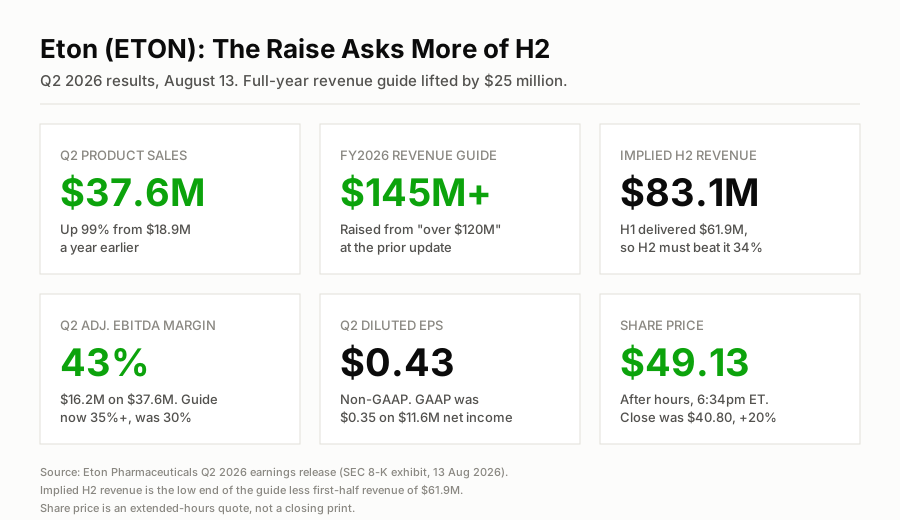
The raise asks more of the second half than the first half delivered.
The Raise Is a Bigger Claim Than the Beat
Guidance raises usually just bank a good quarter. This one does more than that, and the arithmetic shows where.
First-half revenue was $61.9 million, against $36.2 million a year earlier. The old guide of "over $120 million" left $58.1 million for the second half, which is less than the first half produced. That guide had gone stale.
The new guide of "over $145 million" leaves $83.1 million for the second half. That is 34% above the first half, and it is above an annualised run rate on Q2's $37.6 million. Management is guiding to continued sequential growth, not to holding the Q2 level.
The margin line moved with it. Adjusted EBITDA was $16.2 million on $37.6 million, a 43% margin in the quarter, against a full-year guide that was 30% and is now at least 35%. A specialty pharma company printing 43% quarterly margins while still growing sales at 99% is doing something right at the gross-margin line, and the raise says management expects it to hold.
The quarter itself came in well above where the sell-side had it, on both revenue and earnings. I have seen the consensus figure quoted several ways and cannot reconcile the versions against each other, so I will leave the beat unquantified rather than pick one. The company's own numbers are the ones I would use.
Eton Just Licensed a Competitor to Its Own Drug
The strategic move in this release got less attention than the guidance raise, and I think it is the more interesting one.
HEMANGEOL is Eton's oral propranolol for infantile hemangioma. The company relaunched it in May with a patient support programme offering $0 copay for all eligible patients, and reported that roughly 95% of existing patients had transitioned by the end of the quarter. That relaunch is a large piece of why Q2 stepped up to $37.6 million from roughly $24.3 million in Q1.
Then on August 5, Eton licensed US rights to ASN-001 from Auson Pharmaceuticals: a topical timolol gel for proliferating superficial infantile hemangiomas. Same disease. Different route of administration. Management called it potentially the largest revenue opportunity in the portfolio, sizing the addressable population at 20,000 to 30,000 patients a year. Auson's three-arm Phase II/III trial of 168 patients reported week-24 elimination or near-elimination rates of 56% and 42%, against 15% for placebo. If approved it would be the first FDA-approved topical therapy for the indication.
The obvious bear reading is cannibalisation: a topical that parents can apply at home competes with the oral drug Eton just spent money relaunching. My read is that Eton reached the same conclusion and decided it would rather own both ends of it. A first-in-class topical is going to be developed by somebody, and the company holding the oral franchise is the one that loses most if a competitor gets there. Buying the option on your own disruption is cheaper than defending against it, and it converts a threat into a second revenue line off a salesforce that already calls on these prescribers.
What I would want before treating ASN-001 as the growth story: a filing date, and Eton's own view of the pricing. A topical gel priced anywhere near an orphan oral therapy is a very different model, and none of that is in this release.
The Cash Line Is Thin, and It Is Fine
$26.8 million of cash is not much of a cushion for a company guiding to over $145 million of revenue. On most small-caps I would flag it.
I do not here, because the business generates cash rather than consuming it: $16.2 million of adjusted EBITDA in a single quarter against a $26.8 million balance is a different situation from a burn story funding itself with equity. Compare it with Innventure, which suspended its 2026 targets the same evening while burning $59.5 million in a half against $41.5 million of cash. Both are small caps that moved 20% or more after the bell on August 13, in opposite directions, for the same underlying reason: what the cash line does next.
The thing I would watch on Eton is business development. A company acquiring late-stage assets at this pace draws on that balance sheet, and the ASN-001 deal terms will show up in the 10-Q rather than in Thursday's release.
What Would Change My Mind
A second-half revenue print below the run rate implied here would matter more than any single-quarter number, because the raise is a promise about H2 acceleration. So would evidence that the HEMANGEOL $0 copay programme is buying volume at a gross-to-net cost the margin guide has not absorbed yet: 95% patient transition is a good number, but the price realised on those patients is the one that reaches revenue.
For dates on the rest of the reporting season, the earnings calendar has the schedule. Other recent launch-ramp stories on this site worth reading beside this one: Omeros and the YARTEMLEA ramp, and Capricor, narrowing its label to upper limb as the FDA pushes its action date.
The One-Line Read
Sales up 99%, a guide raised $25 million, and 43% quarterly margins: this is a specialty pharma business working. The question I have left is whether the second half can beat the first by 34%, as promised.
Next up:PCE inflation, Wednesday at 8:30am ET →
More on Earnings
Updated Every Saturday
The Week Ahead
Every earnings date, Fed event and setup for the current trading week, on one page.
Refreshed Weekly
Earnings Calendar
Who reports next, when, and what consensus and the whisper expect.
The Week-Ahead Brief
Don’t miss next week’s setups. Get the Sunday brief.
Today's issue“Micron, PCE and the jobs report that decides October”
Every Sunday: next week’s earnings dates, Fed days and the trades worth watching, from the same desk that writes the week-ahead hub. Free, built for retail investors.