Arm Earnings Preview (July 29): The Purest AI Royalty Play, at the Least Forgiving Valuation
Arm reports after the close Wednesday July 29 alongside Microsoft and Meta. Royalty rates, v9 adoption and data-centre share are the lines that matter on a stock priced for perfection.
TL;DR
- Arm reports after the close on Wednesday, July 29, with the call at 5:00pm ET / 2:00pm PT, the same evening as Microsoft, Meta, Qualcomm and Robinhood.
- Arm is the royalty toll on nearly every chip design on earth: it licenses architecture rather than selling silicon, so it earns a cut of an enormous installed base without owning a fab.
- The lines that matter: royalty revenue, licensing revenue, Armv9 adoption and any evidence of data-centre share gains.
- The problem is never the business, it's the price. Arm carries one of the richest multiples in semiconductors into a tape that has stopped paying up for AI.
When Does Arm Report Earnings?
The short answer: Wednesday, July 29, after the US close, with the earnings call at 5:00pm ET (2:00pm PT, 10:00pm BST). This is fiscal Q1 2027, because Arm's financial year begins in April.
Like Qualcomm, Arm is reporting into the most crowded hour of the quarter, hours after a Fed decision and minutes after two megacaps. Expect the after-hours tape to be thin and the real repricing to happen Thursday.
The Board
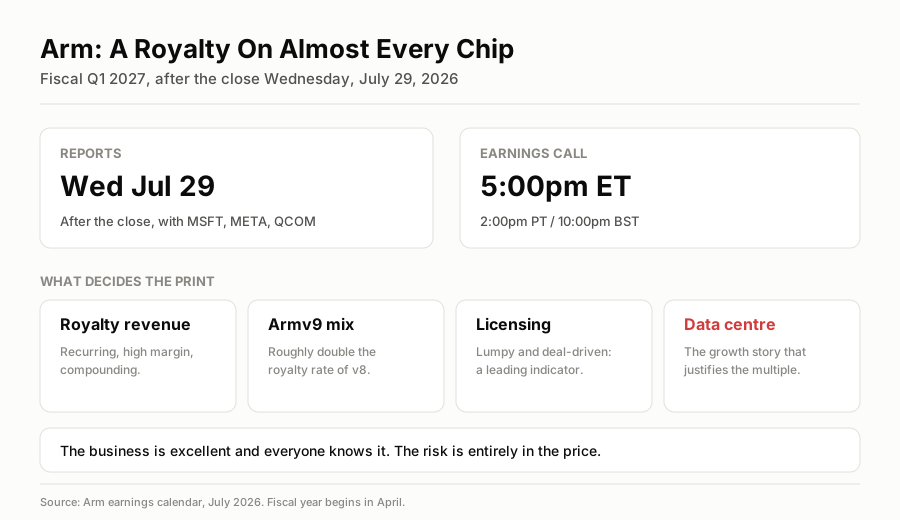
Arm collects a toll on almost every chip designed. The debate is never whether the toll booth works, it is what you should pay to own it.
How Arm Actually Makes Money
This is worth understanding because it explains both the appeal and the valuation.
Arm doesn't manufacture chips and mostly doesn't sell them. It designs the instruction set architecture that other companies build their chips around, then charges twice:
- Licensing revenue, an upfront fee when a customer signs up to use an Arm design. Lumpy, deal-driven, and a leading indicator of future royalties.
- Royalty revenue, a small per-chip cut every time a customer ships silicon built on Arm. Recurring, high-margin, and compounding with the installed base.
The magic is that royalties keep flowing for years from designs licensed long ago, with almost no incremental cost. That's why Arm's margins look more like a software company's than a chipmaker's, and why the market values it like one.
The Two Numbers That Decide the Print
Royalty rate per chip, not just royalty volume. Armv9, the newer architecture, carries roughly double the royalty rate of v8. So Arm can grow revenue even in a flat unit market simply by shifting the mix toward v9. Any commentary on v9 adoption pace is the single most valuable disclosure on the call.
Data-centre penetration. Arm's historic stronghold is mobile, where it is close to universal and therefore has little room to gain. The growth story is servers and AI infrastructure, where custom Arm-based silicon has been taking share from traditional x86. Evidence of that continuing is what justifies the multiple; evidence of it stalling is what breaks it.
The Valuation Problem
Be blunt about the risk. Arm trades at a premium that assumes years of flawless execution, and it reports into a market that spent July punishing exactly that kind of stock. Semiconductors are down roughly 18% from their June high and are the most crowded trade in the market per Bank of America's July survey.
A high-multiple stock has an asymmetric earnings problem: a good quarter is priced in, and a merely-fine quarter is a de-rating. That is the same trap that caught Tesla last week, and it is why Arm's implied move into earnings is typically large.
There's also a structural nuance worth knowing: Arm's licensing revenue is lumpy by nature, so a quarter can look soft purely because of deal timing rather than demand. Management usually explains this; the after-hours algorithms usually don't wait to listen.
The Options Angle
- Arm is a genuine double-digit mover on earnings, and the premium reflects it. Buying options into the print means paying for a large expected move into a certain volatility crush.
- The reporting slot argues against weeklies. Buried under Microsoft and Meta, Arm's repricing may not complete until Thursday. Weekly options need the move now; two-week expiries give the market time to actually read the release.
- If you are bullish but respect the valuation, a call spread caps what you pay for a story that is already expensive on every metric.
- Premium sellers should size for the tail. A high-multiple, high-expectation name reporting into a hostile tape is exactly the profile that gaps through short strikes.
The One-Line Read
Arm collects a royalty on nearly every chip designed on earth and is growing its take per chip as v9 rolls out, which is a genuinely excellent business; the trouble is that everyone knows it, the multiple assumes it continues flawlessly, and the stock reports into a market that has just spent a month refusing to pay premium prices for AI stories, so watch the v9 royalty mix and the data-centre commentary rather than the headline.
More on AI & Semiconductors
$QCOM · 2026-07-28
Qualcomm Earnings Preview (July 29): The Apple Countdown Clock Is the Whole Story
$MU · 2026-07-27
MU and SNDK: Up 210% and 503% This Year, Down Every Day Since June. Is This the Dip to Buy?
$MU · 2026-07-27
What Is CXMT? The Chinese DRAM Maker That Broke Micron, and Whether You Can Actually Buy It
The Sunday Setup
Enjoyed this breakdown? Don’t miss the next market setup.
Get deep-dive analyses delivered to your inbox every Sunday. Free, and built for retail investors.
Comments
0 totalNo comments yet. Be the first to drop a take.