Micron (MU) Stock Jumps 10%: Why UBS's $1,625 Target and the HBM Sellout Reignited the Memory Trade
Micron stock jumped about 10% as UBS set a $1,625 target and raised its HBM price call to +50%. Why MU rallied on July 21, 2026, and the levels that matter now.
TL;DR
- Micron jumped roughly 10% off its post-CXMT lows, reclaiming the ground it lost when the stock broke $900 on July 16. The whole memory complex ripped with it: SanDisk +6%, Western Digital +4%.
- The headline catalyst: UBS set a Street-high $1,625 target, pushed its DRAM-shortage timeline out to at least Q2 calendar 2028, and raised its HBM price assumption to +50% year-over-year (from +35%). Citi and KeyBanc piled on with their own hikes.
- The fundamental under the note is the one we said CXMT could not touch: HBM is sold out for all of 2026 and booked into 2028, with Micron filling only 50-65% of key customers' demand.
- This is the exact trade the July 16 CXMT piece flagged: buy the AI-memory story back at a commodity-DRAM discount once the scare got absorbed. It paid. Now the risk flips to a $1T valuation and a stock that has cratered on good news before.
More on $MU: Mag 7 Slides, Memory Rips: The AI Trade Splits in Two →
The Board
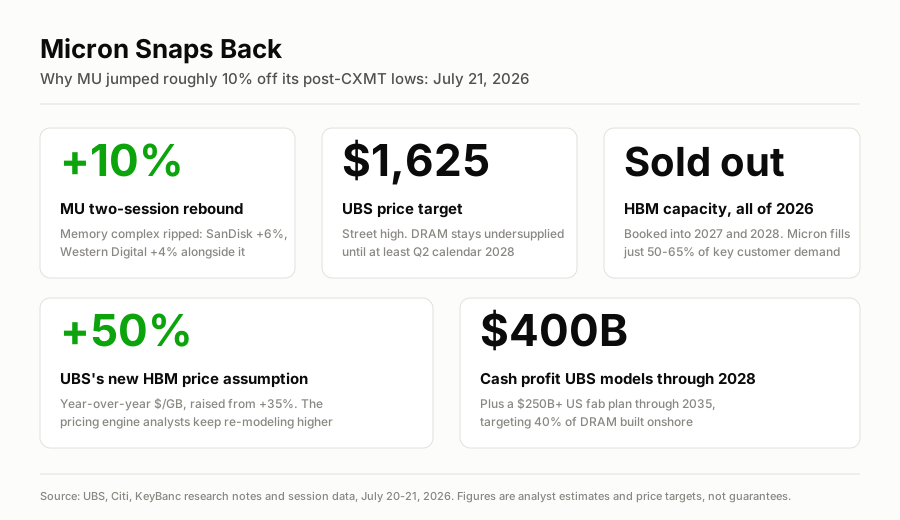
Five numbers explain the snap-back. Four of them are about supply staying tight longer than the bears priced.
What Actually Moved It
Five days ago MU was a wreck. It fell 8% to $903 when China's CXMT announced an $8.5 billion IPO to flood the world with commodity DRAM, and the tape sold everything memory-related in one basket. Today the market un-sold it.
The trigger was UBS, which slapped a $1,625 target on the stock, the highest on the Street. The number matters less than the reasoning. UBS now thinks the DRAM market stays undersupplied until at least the second quarter of calendar 2028, pushed out from its prior Q4 2027 call. Longer shortage means longer pricing power. To make it concrete, UBS raised its assumption for HBM average selling price to +50% year-over-year, up from +35%. When an analyst re-models the single most important variable higher and extends the runway, a repricing follows.
Then came the chorus. Citi hiked its target on the AI-demand surge, and KeyBanc lifted its number citing tighter DRAM, NAND and HBM pricing all at once. This is the mirror image of last week: instead of one bear headline dragging the whole complex down, one bull note dragged the whole complex up. That's why SanDisk and Western Digital rallied in sympathy.
The Number That Beats CXMT: Sold Out
Here's the line that decides the whole argument. Micron's HBM is sold out for all of calendar 2026, and customers have booked into 2027 and 2028. CEO Sanjay Mehrotra has said the company is filling only 50-65% of key customers' medium-term demand. You cannot manufacture a shortage that clean.
This is precisely the split we drew on July 16. CXMT threatens commodity DRAM: the stuff in phones and PCs, where Chinese state subsidies land first. It cannot yet touch HBM, the AI-server product that requires packaging and yield CXMT does not have. Micron is now in mass HBM4 shipment to a lead customer and is shipping HBM4 for Nvidia's Vera-Rubin platform, with the 24-gigabyte variant in volume production. That is the part of the business the 8% CXMT selloff mispriced, and it is the part today's bounce is paying for.
For the falsification test on all of this, the SK Hynix print, see the memory supercycle thesis check and SK Hynix's record on the Nasdaq. Those are the confirming data points, not the marketing.
Why This Rebound Had Receipts
Momentum snap-backs usually run on nothing but relief. This one had names on each leg:
- The shortage got longer, not shorter. UBS moving the undersupply call to 2028 is the opposite of what a CXMT-flood thesis needs to be true.
- The cash is real. UBS models as much as $400 billion in cash profit for Micron between now and 2028, and management is pairing it with a $250 billion-plus US fab plan through 2035, targeting 40% of its DRAM built onshore.
- The base was already strong. MU is up roughly 304% in the first half of 2026, and Q3's report (June 24) showed revenue up about 37% year-over-year on the memory crunch.
Stack those and the 10% looks less like a dead-cat bounce and more like the market admitting last week's CXMT panic over-extended to the one product line CXMT can't build.
The Part The Bulls Are Skipping
Now the other side, because the brand is skepticism of the consensus you're being sold.
MU has a history of cratering on good news. We wrote the sell-the-news crater after record earnings in June for a reason: this stock printed a record quarter and then got dumped. A Street-high target and a sold-out order book are exactly the conditions under which "priced in" becomes the most expensive phrase in the market.
Valuation is now the risk. Micron is knocking on a $1 trillion market cap. At that size, the stock needs the 2028 shortage narrative to hold for two more years without a single hyperscaler blinking on capex. That is the same AI-spend durability question we picked apart in the trillion-dollar semiconductor selloff. A genuine AI-sentiment unwind takes every memory name with it, sold-out book or not.
CXMT didn't disappear; it went quiet. The commodity-DRAM threat is still scheduled, funded supply. It erodes the non-HBM half of the business over quarters, and today's bounce did nothing to change that. The bull case is narrower than the price action suggests: it's an HBM case wearing a whole-company costume.
The Options Angle
- The put-selling trade is back on, carefully. We suspended selling MU puts into the live CXMT fundamental on July 16. With the shortage timeline extended and the complex re-rating, selling downside on pullbacks toward the reclaimed lows is a defensible way to get paid for a thesis with receipts. The mechanics are in the calls and puts guide.
- Own the move with defined risk, not naked size. After a 10% pop into a $1T valuation, call spreads cost less than naked calls and cap what a sell-the-news reversal can do to your premium. You've seen this movie in this exact ticker.
- If you're long the shares, rent them out. A covered call above the recent highs monetizes the stretched move and gives you a buffer if MU does its classic good-news fade.
- Around the next print, structure over direction. MU's earnings reactions are violent in both directions; if you expect fireworks but won't call the sign, that's straddle territory. Check what move the market is already pricing before you pay for it.
The One-Line Read
Micron jumped 10% because UBS extended the DRAM shortage to 2028 and lifted its HBM price assumption to +50%, which is the market finally paying for the sold-out AI-memory book the CXMT scare mispriced last week, exactly the discount-buy we flagged: ride it with defined-risk structures, because the shortage is real and dated but the valuation is now a trillion dollars and this stock has fed the bulls to the bears on good news before.
Next up:MU reports Wed, Sep 30 after the close →
More on $MU
Updated Every Saturday
The Week Ahead
Every earnings date, Fed event and setup for the current trading week, on one page.
Refreshed Weekly
Earnings Calendar
Who reports next, when, and what consensus and the whisper expect.
The Week-Ahead Brief
Don’t miss next week’s setups. Get the Sunday brief.
Latest issue, Sep 7“Week ahead in the stock market...”
Every Sunday: next week’s earnings dates, Fed days and the trades worth watching, from the same desk that writes the week-ahead hub. Free, built for retail investors.