FOMC Minutes August 19: What Time, and the Hawkish Trap
The July FOMC minutes come out Wednesday, August 19 at 2:00pm ET. Three officials voted to hike. Everything printed since has cut September hike odds from 58% to about 33%.
TL;DR
- The July FOMC minutes are released Wednesday, August 19 at 2:00pm ET, covering the July 28-29 meeting. No press conference, no projections.
- That meeting held the target range at 3.50-3.75% on a 9-3 vote. Beth Hammack, Neel Kashkari and Lorie Logan each preferred a quarter-point hike, the first time since September 2016 that three officials dissented in the same direction.
- Everything that landed after the room emptied went the other way: payrolls fell 23,000, CPI came in at 3.4%, retail sales fell 0.6%, sentiment dropped to 51.0. September hike odds went from almost 58% to roughly 33%.
- The trap is treating a three-week-old hawkish record as a live September signal. The committee that wrote it has since been handed four soft prints.
- One thing in it is still worth the read: the counting words. If the minutes say several participants saw a hike as appropriate soon, the hawkish bloc is much wider than the three who voted, and that survives the soft data.
More on $SPY: Stock Market Week Ahead (Sep 28-Oct 2): Micron Earnings, PCE Inflation, and the Jobs Report That Decides an October Fed Hike →
What Time Do the FOMC Minutes Come Out?
2:00pm ET on Wednesday, August 19, published on the Federal Reserve's website. Minutes come out three weeks to the day after a decision, so this set covers July 28-29 and stops there.
Nothing else ships with them. No press conference, no dot plot. The next Summary of Economic Projections arrives with the September 15-16 decision, and Chair Kevin Warsh's next scheduled remarks are the keynote at Jackson Hole on Friday, August 28.
The Board
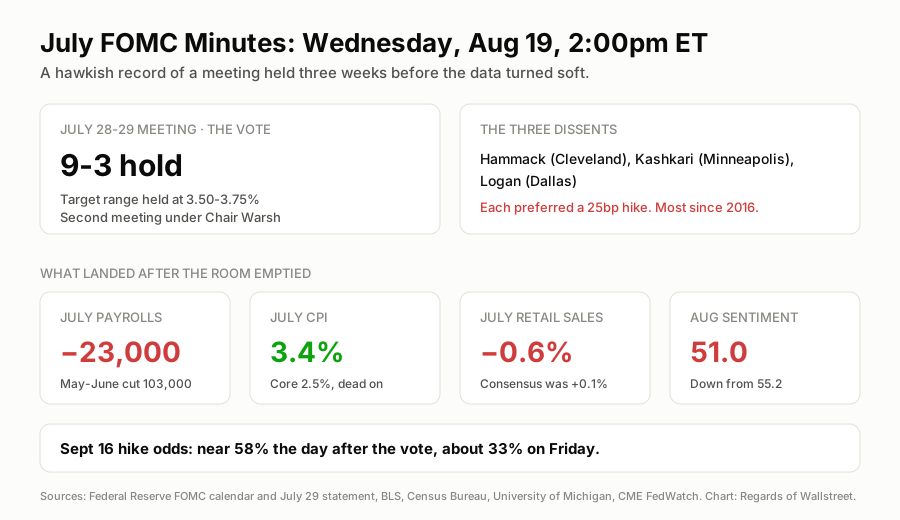
A hawkish record of a meeting held three weeks before the data turned.
Nine to Three
Read the statement itself and the substance is one sentence: the range stays at 3.50-3.75%. The vote is where the information sits. Hammack of Cleveland, Kashkari of Minneapolis and Logan of Dallas all voted no, and all three wanted the same thing, a 25 basis point increase.
Dissents happen. Three of them pointing the same way have not happened since September 2016, and Kashkari arriving in that group was the genuine surprise, given where he has historically sat. Inflation has now run above 2% for more than five years, which is the argument the three were making.
Warsh runs a statement with no guidance language in it at all, so there is no sentence anywhere telling you how close the other nine were. That absence is the reason a routine document gets attention this month. The minutes are the only record of the argument.
Then Four Prints Went the Other Way
The committee met on July 29. Here is what arrived afterwards.
Payrolls fell 23,000 in July, with May and June revised down a combined 103,000 and participation at 61.4%. July CPI printed 3.4% headline and 2.5% core, matching the nowcast on every line, with the energy index down 1.5% rather than up. July PPI was unchanged on the month on Thursday, against a consensus that wanted +0.1%. Then Friday delivered two at once: retail sales fell 0.6% against a consensus of +0.1%, and preliminary August sentiment dropped to 51.0 from 55.2.
The pricing moved with it. Hike odds for September ran near 58% the day after the July meeting. By Friday they sat around 33% on CME FedWatch, having been about 34.8% before retail sales landed. Zacks put Friday's hold probability at 67.1%, which is the same number from the other side. Call it a third, with a couple of points of spread across sources.
So the minutes will describe a committee worrying about inflation, and the market spent the fortnight since deciding the labour market and the consumer are the bigger problem. Both readings were defensible when they were made. Only one of them is current.
What I Will Actually Read For
Three things, in order.
The counting words. Fed minutes quantify agreement with a fixed vocabulary: a couple, a few, some, several, many, most. The dissent was three. If the minutes report that several participants judged a hike appropriate at this meeting or soon after, the hawkish bloc is roughly twice the size of the vote, and that does not get repriced away by one weak retail sales report. If it reads a few, the three are isolated and September is close to settled.
What they said about jobs before the jobs number. The July meeting predates the August 7 payrolls miss. Whatever baseline the committee described for the labour market is the thing that broke nine days later. If participants already flagged softening, the dissenters were hiking into a slowdown they could see, which is a more committed position than it looked at the time.
Oil. The post-ceasefire energy move is the one inflation input still pointing up, with Brent settling around $87 this week. If the minutes show the committee treating the spike as a level shift rather than a passing one, that framing outlives the soft prints.
Wednesday Is Not a Quiet Afternoon
The minutes land at 2:00pm into a day that already has Target, Lowe's and TJX reporting, in the middle of retail earnings week. Home Depot goes Tuesday. The full map is in the week-ahead hub.
There is also a bond auction in the hour beforehand. Treasury sells $16 billion of a new 20-year with bids closing at 1:00pm ET, close enough to 5.245% to set a record for the tenor. If that auction goes badly, the minutes arrive into a long end already under pressure, and the two get read as one story.
That crowding cuts both ways for the reaction. A hawkish-sounding set of minutes at 2:00pm has two hours to move a tape that spent the morning digesting whether the American consumer is actually spending. The market closed Friday with the S&P 500 at 7,785.76 and the Russell 2000 at a record 3,068.42, which is a tape leaning hard on the idea that the hiking is over.
I do not think Wednesday reverses that. Minutes rarely move much on their own, and this set is stale in a specific, knowable way. The scenario I would watch for is narrow: a large hawkish bloc revealed in the counting words, landing the same afternoon a retailer confirms the consumer is fine. That combination puts September back in play, and nothing else in the document does.
The One-Line Read
These minutes describe July 29 and nothing after it, and four prints have landed since. Read them for how many of the nine nearly joined the three, then ignore the rest of the file.
Next up:PCE inflation, today at 8:30am ET →
More on $SPY
$SPY · 2026-09-27
Stock Market Week Ahead (Sep 28-Oct 2): Micron Earnings, PCE Inflation, and the Jobs Report That Decides an October Fed Hike
$SPY · 2026-09-19
Stock Market Week Ahead (Sep 21-25): Costco, AutoZone, KB Home and a 5% Ten-Year
$SPY · 2026-09-18
Options Scorecard: A Reddit Put and a Nutanix Pass, Both Right at Expiry
Updated Every Saturday
The Week Ahead
Every earnings date, Fed event and setup for the current trading week, on one page.
Refreshed Weekly
Earnings Calendar
Who reports next, when, and what consensus and the whisper expect.
The Week-Ahead Brief
Don’t miss next week’s setups. Get the Sunday brief.
Latest issue, Sep 27“Micron, PCE and the jobs report that decides October”
Every Sunday: next week’s earnings dates, Fed days and the trades worth watching, from the same desk that writes the week-ahead hub. Free, built for retail investors.