Samsung's New Foldables Are Aimed at Apple, Not Your Wallet: The Z Fold 8 Wide, Explained
Samsung unveiled the Galaxy Z Fold 8, Z Flip 8, and a wide 4:3 Z Fold 8 Wide on July 22, 2026 to front-run Apple's foldable iPhone. Why it barely moves the ₩318,000 stock.
TL;DR
- Samsung used its July 22, 2026 Unpacked in London to launch three folding phones: the standard Galaxy Z Fold 8, the clamshell Galaxy Z Flip 8, and a brand-new wide-format Galaxy Z Fold 8 Wide that ships roughly two months before Apple's first foldable iPhone.
- The Wide is the whole point: it trades the tall, narrow book-fold shape for a shorter, 4:3 tablet-style screen, the same aspect ratio Apple is rumored to use. Samsung got there first, on purpose.
- Prices land where you'd fear: the Fold 8 starts around $2,000, the Wide near $1,999-$2,099, the Flip 8 around $1,200.
- Here's the trap for investors: the phone division is a rounding error next to chips. Samsung's Q2 operating profit hit a record ₩89.4 trillion on AI memory, and the stock (005930) still fell about 6% on the news. A folding phone won't move a ₩318,000 share.
- The real Samsung trade is HBM and DRAM, not hinges. The foldable launch is a brand flex and an Apple spoiler, not an earnings catalyst.
More on $SSNLF: Samsung Q2 Earnings, July 30: A Record ₩89.4 Trillion Profit the Market Has Already Sold Twice →
The Board
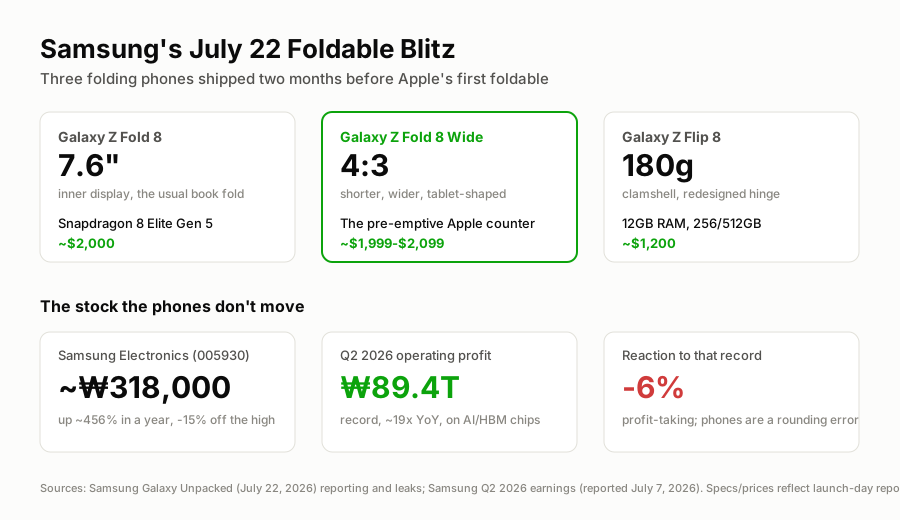
Three shiny phones on top. The number that actually matters is the red one on the bottom right.
What Samsung Actually Launched
Three foldables, one clear target.
- Galaxy Z Fold 8 (the usual book fold): a 7.6-inch QHD+ inner display, a 5.5-inch cover screen, the Snapdragon 8 Elite Gen 5 chip, 50MP dual cameras, and a 4,800 mAh battery. This is the iterative upgrade: thinner, brighter, a slightly better hinge. It starts around $2,000.
- Galaxy Z Fold 8 Wide (the new shape): instead of the narrow candy-bar-that-opens-into-a-book, the Wide unfolds into a shorter, wider 4:3 panel that reads like a small tablet. Same top-tier Snapdragon silicon, priced around $1,999-$2,099. This is the phone the whole event was built around.
- Galaxy Z Flip 8 (the clamshell): about 13.2mm folded, 6.6mm open, roughly 180 grams, with a redesigned hinge to fight the crease, 12GB of RAM and 256GB/512GB storage. Snapdragon 8 Elite Gen 5 in the US, Exynos 2600 in Europe and Korea. Around $1,200.
The specs are fine. The specs are always fine. What's new is the aspect ratio, and the reason it exists has nothing to do with your pocket.
Why Build a Wider Fold At All?
To get ahead of Apple.
Apple's first foldable iPhone is expected to be announced in September, but the hinge and cover-glass manufacturing is hard, and reporting suggests real sales could slip to October or November in limited quantities. The rumored Apple design leans on a wider, tablet-ish unfolded screen rather than Samsung's traditional tall fold.
So Samsung did the obvious thing: it built that shape first and shipped it in July, roughly two months before Apple even goes on sale. Same aspect ratio, proven supply chain, on shelves now. It's a spoiler launch, planting a flag on the design language Apple was going to use so that the iPhone foldable arrives looking like the follower.
Whether it works commercially is another question. Counterpoint Research has floated that Apple's foldable could grab around 29% of the foldable market on release anyway, because Apple is Apple and the ecosystem does the selling. Samsung also isn't just fighting Apple: Honor and other Chinese OEMs have been shipping thin, cheap foldables that keep undercutting the Galaxy Z line. Being first is an advantage. It is not a moat.
The Part Investors Keep Getting Wrong
Now the discipline part, because this is a stock site, not a gadget blog.
If you are buying Samsung Electronics (traded in Seoul as 005930, and over-the-counter in the US as SSNLF) because of a cool new folding phone, you are watching the wrong screen. The mobile division is real, but it is dwarfed by semiconductors right now.
Look at the actual money. On July 7, Samsung reported Q2 2026 revenue of about ₩171 trillion and a record operating profit near ₩89.4 trillion, roughly a 19-fold jump year on year. That number is one of the largest quarterly operating profits any tech company has ever posted, and it came almost entirely from AI-driven memory: high-bandwidth memory (HBM) and DRAM feeding the same data-center buildout that's been powering the AI chip trade's V-shaped comeback and Micron's HBM-fueled run.
A foldable phone launch, however slick, is a marketing event against that backdrop. Even a blockbuster Galaxy Z quarter is a few million units at a few hundred dollars of margin each. It does not register next to an ₩89 trillion memory print.
Records Don't Guarantee Green Days
Samsung posted a record profit and the stock still dropped about 6% the same session, as investors took profits after a monster run: 005930 trades around ₩318,000, up roughly 456% over the past year but down about 15% from its all-time high.
That is the whole lesson of this earnings season in one stock. Good news that's already priced gets sold, a pattern that shows up over and over, from the 87% earnings-beat paradox to Apple heading into its own print with the CXMT memory question hanging over it. If a record semiconductor quarter can't hold a green candle, a folding phone certainly can't. Analysts still carry a "Strong Buy" consensus with price targets up toward ₩468,000, but the debate is entirely about memory pricing and HBM4 ramp, not screens. Samsung's full divisional breakdown lands around July 30, and that report, not Unpacked, is the one that moves the stock.
The Options Angle
You can't cleanly trade the Seoul-listed shares from a US brokerage, and SSNLF is a thin, awkward over-the-counter ticker, so treat this as a framing exercise more than a live options chain.
- Don't confuse the product event with the earnings event. Unpacked is a scheduled hype cycle with no numbers attached. If you want exposure to Samsung's actual profit engine, the July 30 divisional report and the HBM/DRAM pricing cycle are the catalysts, not the phone launch.
- The memory read-through is the tradable part. Samsung's HBM and DRAM strength confirms the same demand thesis under Micron, SK Hynix, and the broader AI-memory complex. Those names have liquid US-listed options, with real calls and puts if you want to express the memory-cycle view where you can actually get filled.
- If you own SSNLF and just want yield, temper expectations. Thin volume means wide spreads and poor pricing on any covered call you'd try to write against it. The liquid way to play "Samsung's cycle" is usually its suppliers and memory peers, not the ADR itself.
- Watch Apple's launch as the real foldable catalyst. The September iPhone foldable, and any production delay into Q4, is more likely to move sentiment across the whole foldable supply chain than Samsung's July reveal did.
The One-Line Read
The Galaxy Z Fold 8 Wide is a smart, aggressive shot at Apple, a wider tablet-style foldable shipped two months before the iPhone version can reach shelves, but it is a branding win, not an earnings catalyst: Samsung is a memory stock wearing a phone company's logo, and a ₩318,000 share that shrugged off a record ₩89.4 trillion profit is not going to move for a hinge.
Next up:PPI, tomorrow at 8:30am ET →
More on $SSNLF
$SSNLF · 2026-07-29
Samsung Q2 Earnings, July 30: A Record ₩89.4 Trillion Profit the Market Has Already Sold Twice
$NYAX · 2026-08-25
Why Is Nayax Stock Up? A $350 Million Bet on Parking Meters
$SSDIY · 2026-08-25
Samsung SDI Jumps 8% After a $3.2 Billion Stake Sale to Pay for the Plant GM Walked Away From
Updated Every Saturday
The Week Ahead
Every earnings date, Fed event and setup for the current trading week, on one page.
Refreshed Weekly
Earnings Calendar
Who reports next, when, and what consensus and the whisper expect.
The Week-Ahead Brief
Don’t miss next week’s setups. Get the Sunday brief.
Latest issue, Sep 7“Week ahead in the stock market...”
Every Sunday: next week’s earnings dates, Fed days and the trades worth watching, from the same desk that writes the week-ahead hub. Free, built for retail investors.