PayPal Q2 2026 Earnings Preview: The Options Are Priced for the Wrong Event
PayPal reports Q2 2026 before the bell July 28. Consensus $1.28 EPS on $8.5B revenue, options price an 8.8% move, and a $60.50 takeover bid changes the math.
TL;DR
- PayPal reports Tuesday July 28, before the open. Consensus is $1.28 EPS (down 8.6% from $1.40) on revenue of about $8.5 billion, up roughly 2.7%.
- Estimates have been cut steadily, from $1.34 to $1.28 over 90 days. The Street expects rising revenue and falling profitability, which is the worst combination for a multiple.
- None of that is the real story. On July 15, Stripe and Advent International bid $60.50 a share, valuing PayPal above $53 billion, a 28% premium to the prior close of $47.37, backed by roughly $50 billion in committed bank financing.
- The stock sits near $56.15, about 7.2% below an all-cash offer that is already on the table. PayPal's board has reportedly signalled the price is too low.
- Options price an 8.8% move (roughly $51.10 to $61.20) against an average post-earnings move of 4.6% over 12 quarters. That gap is the entire trade.
When Does PayPal Report, and Why Is the Stock Up?
The short answer: PayPal reports Tuesday July 28 before the bell, and the stock is up because someone offered to buy the whole company two weeks ago, not because the business turned around.
That distinction governs everything below. A quarter that would normally send PYPL down 6% may now send it down 2%, because there is a cash bid underneath it. A quarter that would normally be ignored may now matter enormously, because it is ammunition in a live negotiation.
The Board
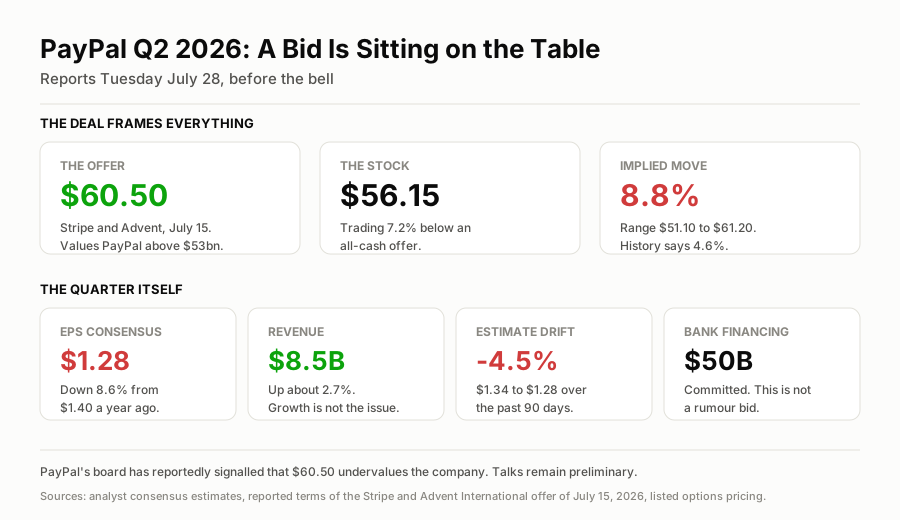
The top row is why this is not a normal earnings print. The bottom row is the print itself.
The Deal Is the Frame
On July 15, Stripe and Advent International made an offer of $60.50 per share. The reported structure matters: the two would take equal ownership stakes rather than break the company up, and the bid carries approximately $50 billion in committed bank financing. This was not an opening feint. An initial approach reportedly came in early April, meaning the bidders have had months with the numbers.
PayPal's board has reportedly taken the view that $60.50 undervalues the company. Neither side has commented publicly, and talks are described as preliminary and confidential. There is no certainty a deal happens.
Now apply that to Tuesday. There are three outcomes and they are not symmetric:
- A strong quarter hands the board evidence for its "you are lowballing us" position. The stock does not need to rise much, because it is already anchored near the bid. But the probability of a raised offer goes up.
- A weak quarter does the opposite. It strengthens the bidders' argument that $60.50 is generous, and pressures a board that just rejected it. Awkward for management, and not obviously terrible for the stock, because the odds of the board accepting go up.
- Talks collapse. This is the real downside, and earnings are only loosely connected to it. Without the bid, PYPL reprices toward the $47.37 it closed at on July 14. That is roughly 16% below where it trades now.
What Actually Matters in the Numbers
If you strip out the deal, here is what the quarter is genuinely about:
Transaction margin, not revenue. Consensus revenue of roughly $8.48 to $8.51 billion (estimate range $8.29 to $8.75 billion) is expected to grow about 2.7%, while EPS falls 8.6%. That divergence is the whole PayPal bear case in one line: PayPal is still moving more money and keeping less of it. The margin line is the one that decides whether the business deserves more than the bid.
Branded checkout. The high-margin core. Unbranded processing volume flatters the top line and does very little for profit. If branded growth is soft again, the "revenue is growing" defence gets harder to make.
Guidance. The company guided to low single digit currency-neutral revenue growth for the quarter. What it says about the back half is the thing the board and the bidders will both read closely.
The estimate trend. Analysts have cut EPS 4.5% in 90 days, from $1.34 to $1.28. A beat against a lowered bar is not the same as a good quarter, and in a negotiation, everyone knows the bar moved.
The Options Angle
This is the most interesting options setup of Tuesday's four names, and it is interesting for a specific reason: the implied volatility is pricing deal risk while the calendar event is an earnings report.
Options imply an 8.8% move, a range of roughly $51.10 to $61.20. PayPal's average post-earnings move over the last 12 quarters is 4.6%. You are being asked to pay nearly double the historical move for a quarter whose downside is partly floored by a live cash bid.
The ranking, worst to best.
Long straddle. Conviction: 2/10. The worst trade on this board. A straddle at 8.8% needs a huge move to pay, and the single most likely large move (a deal announcement) is not scheduled for Tuesday. You would be paying deal-inflated premium for an earnings catalyst, then watching IV crush on Tuesday morning whether or not you were directionally right. This is the textbook example of buying options priced for the wrong event.
Long strangle. Conviction: 2/10. Cheaper version of the same mistake. Same problem, wider goalposts.
Long calls above $60.50. Conviction: 3/10. A bet on a raised bid. The logic is sound and the payoff is real, but you are buying a lottery ticket on a specific negotiation resolving upward within a specific expiry. Cheap, low odds, and fine as a small speculative position. Not a core trade.
Covered call against a long position. Conviction: 6/10. If you own PYPL and think a deal gets done near $60.50, selling a covered call at or above the offer is coherent: you keep the deal upside to the strike, and you get paid inflated premium for capping upside you did not expect to get anyway. The risk is a raised bid taking your shares at $60 when the deal closes at $68.
Put credit spread below $51. Conviction: 7/10, and the best structure here. This is the one trade that actually uses the situation rather than fighting it. Selling a defined-risk put spread beneath the implied range gets paid the deal-inflated premium, and it wins in every scenario except the one where talks die. Your thesis is not "earnings will be good." Your thesis is "a board that just called $60.50 too low is unlikely to let this stock print $47 next week."
The honest caveat, and it is a real one: a bid is not a floor. It is a floor only for as long as the bidders want the asset. Stripe and Advent can walk, and if they do, the $50 billion of committed financing disappears with them and PYPL trades on the $1.28 quarter alone. Size the put spread as though that can happen, because it can.
The One-Line Read
PayPal is reporting a mediocre quarter into an options market charging deal-sized premium for an earnings-sized event, which makes buying volatility the obvious trap and selling it beneath the bid the genuinely good trade. Just remember what you are actually underwriting: not PayPal's margins, but Stripe and Advent's patience.
Also reporting before the bell Tuesday: Boeing, UPS and Coca-Cola. Monday's session is broken down here.
More on Earnings
$MRNA · 2026-07-28
Moderna Earnings Preview (July 31): Revenue Near $103 Million, and the Only Question Is the Runway
$RDDT · 2026-07-28
Reddit Earnings Preview (July 30): After the Last Faceplant, the Google Dependency Is the Whole Risk
$RBLX · 2026-07-28
Roblox Earnings Preview (July 30): Bookings, Bots and the Profitability Question That Never Goes Away
The Sunday Setup
Enjoyed this breakdown? Don’t miss the next market setup.
Get deep-dive analyses delivered to your inbox every Sunday. Free, and built for retail investors.
Comments
0 totalNo comments yet. Be the first to drop a take.