Boeing Q2 2026 Earnings Preview: The Loss Is Already Priced. The Cash Number Is the Trade.
Boeing reports Q2 2026 before the bell July 28. Consensus is a $0.31 loss on $24.1B revenue, options price a 5-7% move, and free cash flow is the real number.
TL;DR
- Boeing reports Tuesday July 28, before the open. Consensus is a loss of $0.28 to $0.34 per share on revenue of $24.05 to $24.27 billion, up more than 7% year on year.
- Do not trade the EPS line. A loss is the guidance. Negative free cash flow is also the guidance. Neither one is news on Tuesday.
- What is genuinely unpriced: another 777X charge. Boeing already took a $4.9 billion hit and pushed deliveries to 2027, and analysts have cut 2026 free cash flow forecasts by more than half since mid-July on certification delays.
- The bullish unpriced item: a 737 rate increase from 42 to 47 a month, newly plausible after the FAA restored Boeing's self-certification authority on July 17.
- Options price a move of roughly 5% to 7%. Our read: the straddle is a 4 out of 10. The defined-risk directional structures are better.
When Does Boeing Report Q2 2026 Earnings?
The short answer: Tuesday, July 28, before the market opens, with the call following that morning. It lands in the middle of the heaviest week of the summer, two days before the Fed decision and alongside PayPal, UPS and Coca-Cola on the same pre-bell slot.
The Board
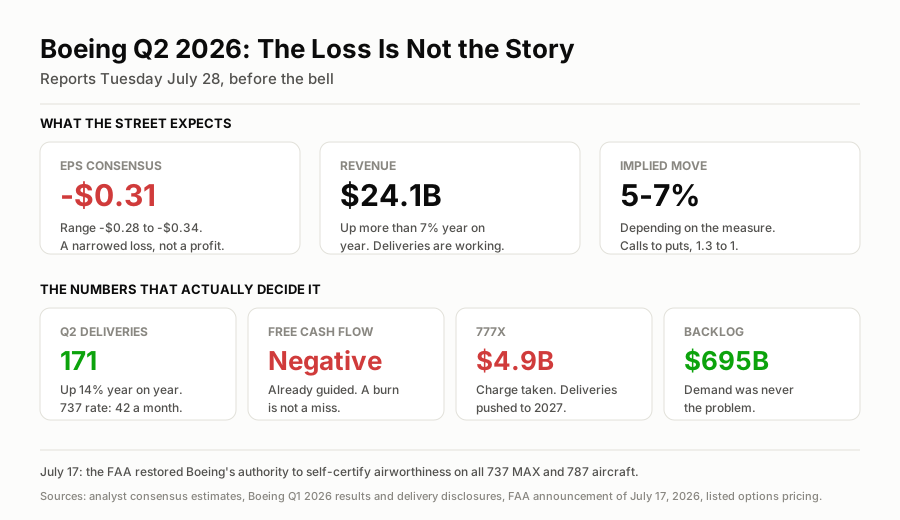
Everything on the top row is consensus. Everything on the bottom row is what actually moves the stock.
What Actually Matters (It Isn't EPS)
Boeing is not an earnings-per-share company right now. It is a cash-conversion story wearing an aerospace company's clothes, and the market prices it accordingly. Four things decide Tuesday:
1. Free cash flow, and the framing around it. Management already guided Q2 to a cash outflow. That means a negative print is not a miss, it is the plan. The trade is in the magnitude and the language. Analysts entered July expecting about $2.46 billion of free cash flow for full-year 2026 and have since cut that by more than half. If Boeing reaffirms a path back to positive cash in the second half, the stock takes it well. If the second-half language softens, the cut goes deeper.
2. The 777X. This is the live grenade. Boeing already booked a $4.9 billion charge and moved first deliveries to 2027, putting its largest in-production jet more than seven years behind schedule. Certification is running slow. A second charge is the single fastest way for this print to go badly, and it is the one item the consensus EPS number cannot capture.
3. The 737 rate. Production is stable at 42 a month with active preparation to move to 47. On July 17 the FAA restored Boeing's authority to self-certify airworthiness on all 737 MAX and 787 aircraft, a milestone that removes a structural bottleneck on any rate increase. If management puts a date on 47 a month, that is the bullish surprise.
4. Deliveries and the factory. Q2 commercial deliveries hit 171 units, up 14% year on year, after 143 in Q1 (up from 130). Underneath, rework hours fell 20% on the 737 final assembly line and improved more than 25% on the 787 floor. That is the boring operational evidence that the turnaround is real, and it is the reason the balance sheet is healing: Boeing paid down $6.95 billion of debt in Q1, taking total debt from $54.1 billion to $47.2 billion.
Demand has never been the issue. The backlog stands at roughly $695 billion. Boeing's problem has always been converting that backlog into aircraft and cash.
The Options Angle
The implied move depends on who you ask, which is itself a tell. The July 31 weekly $210 straddle prices roughly a 7% move, while options data compiled by Bloomberg puts it nearer 4.9%. Call-to-put volume runs about 1.3 to 1, a mild bullish lean rather than a crowd.
Here is the honest ranking, worst to best.
Long straddle. Conviction: 4/10. This is the default trade and it is mediocre here. You are paying up to 7% for an event where the two most likely bad outcomes, a loss and a cash burn, are both pre-announced. A straddle needs a surprise, and Boeing has spent six months systematically removing surprises from this print. If you buy it, you need a 777X charge or a rate-increase date, and you are paying for both when only one can happen.
Short strangle or naked premium selling. Conviction: 2/10. Tempting, and wrong. Yes the vol looks rich against pre-guided results. But the specific tail risk here is a multi-billion-dollar programme charge, which is exactly the kind of event that gaps a stock through your short strike overnight. Do not sell undefined risk into charge risk.
Iron condor around the pre-guided range. Conviction: 5/10. The defined-risk version of the above, and a genuinely reasonable expression if your view is "everything bad is already known." An iron condor collects the elevated premium and caps the disaster. The reason it is not higher: Boeing's realised moves cluster at the extremes, so the middle you are selling is thinner than it looks.
Put spread as charge insurance. Conviction: 6/10. If you own Boeing into the print, buying a defined-risk put spread is the cleanest hedge available against the one unpriced tail. You are not betting on a charge. You are refusing to be naked to it. That is a different and better reason to own puts.
Call spread on the rate story. Conviction: 7/10, and the best trade on the board. The 42-to-47 announcement is a real, dateable, positive catalyst that the FAA decision just made credible, and a call spread expresses it for a fraction of the straddle's cost with a hard floor on the loss. You give up the unlimited upside. In a stock that has spent two years grinding rather than exploding, that is a cheap thing to give up.
The trade we would not put on: anything undefined. Boeing is a company that has taken a nine-figure or ten-figure surprise charge in more quarters than not since 2019. Define your risk.
The One-Line Read
Boeing has spent two quarters teaching the market to stop caring about its loss line, which means Tuesday is decided by two numbers that are not in the consensus: whether the 777X takes another charge, and whether management finally puts a date on 47 aircraft a month. Buy the second one with a call spread, insure against the first one with a put spread, and leave the straddle to people who have not read the guidance.
Also reporting before the bell Tuesday: PayPal, UPS and Coca-Cola. The full week, including Monday's session, is mapped here.
More on Earnings
$MRNA · 2026-07-28
Moderna Earnings Preview (July 31): Revenue Near $103 Million, and the Only Question Is the Runway
$RDDT · 2026-07-28
Reddit Earnings Preview (July 30): After the Last Faceplant, the Google Dependency Is the Whole Risk
$RBLX · 2026-07-28
Roblox Earnings Preview (July 30): Bookings, Bots and the Profitability Question That Never Goes Away
The Sunday Setup
Enjoyed this breakdown? Don’t miss the next market setup.
Get deep-dive analyses delivered to your inbox every Sunday. Free, and built for retail investors.
Comments
0 totalNo comments yet. Be the first to drop a take.