Coca-Cola Q2 2026 Earnings Preview: A Record High, a 3% Implied Move, and the One Number That Can Break It
Coca-Cola reports Q2 2026 before the bell July 28. Consensus $0.93 EPS on $13.1B revenue, options price about a 3% move, and volume versus pricing decides it.
TL;DR
- Coca-Cola reports Tuesday July 28, before the open. Consensus is $0.93 EPS, up from $0.87 a year ago, on revenue of about $13.1 billion, up 4.2%. Organic revenue growth is modelled near 3.9%.
- KO has beaten EPS in 9 of the last 10 quarters. The bar is a formality, and that is precisely the risk when the stock is sitting near an all-time high.
- The number that decides it is not EPS or revenue. It is the split between price and volume inside that organic growth figure.
- Options price roughly a 3% move, putting about $10.7 billion of market value on the line. Call volume runs 4.7 to 1 against puts, which is a crowding warning, not a bullish signal.
- Our read: this is the one name Tuesday where selling premium is the genuinely good trade and buying it is close to indefensible. Straddle: 2/10. Defined-risk premium sale: 7/10.
When Does Coca-Cola Report Q2 2026 Earnings?
The short answer: Tuesday July 28, before the market opens, alongside Boeing, PayPal and UPS on the same pre-bell slot, and one day before the Fed decision.
That last detail is doing more work than it looks. KO is a bond proxy as much as a beverage company. A defensive dividend payer trading at a record high two days before a rate decision is not a valuation statement, it is a positioning statement, and positioning unwinds fast when it is wrong.
The Board
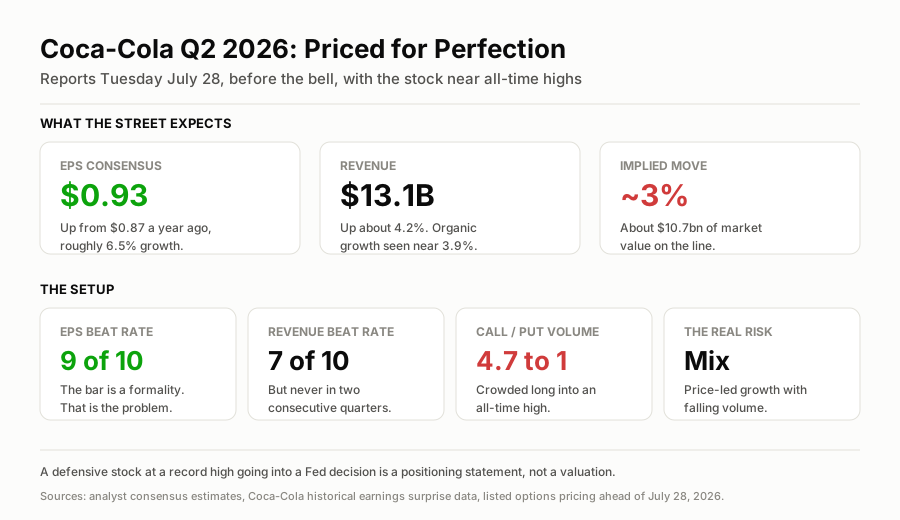
Everything here says the quarter will be fine. That is exactly why the risk is asymmetric.
What Actually Matters: The Mix, Not the Number
Coca-Cola will almost certainly beat. It has beaten EPS in nine of its last ten quarters. Consensus of 92 to 93 cents implies growth of 5.6% to 6.5% against last year's 87 cents, and revenue of $13.1 to $13.17 billion implies about 4.2% growth. None of that is in doubt.
The question is what is inside it.
1. Price versus volume. Organic growth near 3.9% can be produced two completely different ways. Price-led growth with flat or falling unit case volume means Coca-Cola is raising prices into a consumer that is buying less, which works until it abruptly does not. Volume-led growth means the brand is genuinely taking share. Same headline number, opposite investment case. This is the single line item to find in the release.
2. Margin and currency. The company has ridden effective pricing actions and value share gains across the non-alcoholic ready-to-drink category. Both are lapping tougher comparisons now. Currency movements can swing the comparable EPS line more than the underlying business does in any given quarter.
3. Guidance. The historical pattern is quietly instructive: KO has topped revenue estimates in seven of the last ten quarters, but never in two consecutive quarters. That is not a coincidence, it is a company that manages expectations carefully. If guidance is merely reaffirmed rather than raised, a stock at a record high has nowhere friendly to go.
4. The Pepsi comparison. KO has been outperforming its closest peer, and a lot of the current multiple assumes that continues. Any evidence the gap is closing matters more than the absolute numbers.
The Options Angle
Options are pricing roughly a 3% move, which puts about $10.7 billion of market capitalisation in play. In absolute terms that is a small implied move, the smallest of Tuesday's four names. Relative to what Coca-Cola actually does after earnings, it is generous.
And then there is the positioning. Call volume is running about 4.7 to 1 against puts into the print. Read that carefully. Heavy call buying into an all-time high on a defensive megacap is not smart money finding an edge. It is a crowded, one-directional bet on the most heavily forecast quarter of the day. Crowded longs are what create downside gaps in stocks that "never move."
The ranking, worst to best.
Long straddle. Conviction: 2/10. You are paying about 3% for a company that beats nine times out of ten, guides conservatively, and typically moves one to two percent on the day. A straddle needs a surprise from a business designed to eliminate surprises, and IV crush on Tuesday morning takes the rest. This is the definition of an options trade that exists only because a date exists.
Long calls. Conviction: 2/10. Joining a 4.7-to-1 crowd at a record high the day before a Fed decision. If you want to be long KO, buy the shares and collect the dividend.
Long puts as a standalone bet. Conviction: 3/10. The contrarian case is real (crowded positioning, record high, rate risk) but the instrument is wrong. Cheap puts on a 3% implied move still need a genuine break to pay, and KO rarely delivers one.
Iron condor. Conviction: 7/10, and the best structure on this board. This is the rare setup where the textbook answer is also the correct one. An iron condor gets paid when a stock goes nowhere, and Coca-Cola going nowhere is the single most probable outcome of Tuesday morning. You are selling elevated event premium on a business with a decade of low realised earnings moves, with defined risk on both wings. The reason it is a 7 and not a 9: the wings are cheap for a reason, and the one scenario that hurts (a volume miss revealing price-only growth) is exactly the scenario nobody is positioned for.
Covered call for existing holders. Conviction: 8/10, and the highest-conviction trade we will name across all four names. If you already own Coca-Cola, and most income investors who own it have owned it for years, selling a covered call into earnings-inflated implied volatility is close to free money by the standards of this business. You are being paid a premium for capping upside on a stock that has essentially never gapped 8% higher on a quarterly print. The trade risks the thing least likely to happen. That is what a good options trade looks like, and it is the opposite of what the 4.7-to-1 call crowd is doing.
The honest caveat: every premium-selling structure above assumes KO behaves like KO. The one thing that would break it is a volume number bad enough to reframe the entire pricing story. That is a small probability. It is not zero, and a decade of quiet earnings reactions is exactly what makes people forget it.
The One-Line Read
Coca-Cola will beat, guide carefully, and probably move about a percent, which makes it the only name reporting Tuesday where the sensible options trade is selling volatility rather than buying it. The tell is not the earnings estimate. It is 4.7 calls for every put at an all-time high the day before the Fed, which is what a consensus looks like right before it gets tested.
Also reporting before the bell Tuesday: Boeing, PayPal and UPS. Monday's session, and the Fed setup, are covered here and here.
More on Earnings
$MRNA · 2026-07-28
Moderna Earnings Preview (July 31): Revenue Near $103 Million, and the Only Question Is the Runway
$RDDT · 2026-07-28
Reddit Earnings Preview (July 30): After the Last Faceplant, the Google Dependency Is the Whole Risk
$RBLX · 2026-07-28
Roblox Earnings Preview (July 30): Bookings, Bots and the Profitability Question That Never Goes Away
The Sunday Setup
Enjoyed this breakdown? Don’t miss the next market setup.
Get deep-dive analyses delivered to your inbox every Sunday. Free, and built for retail investors.
Comments
0 totalNo comments yet. Be the first to drop a take.